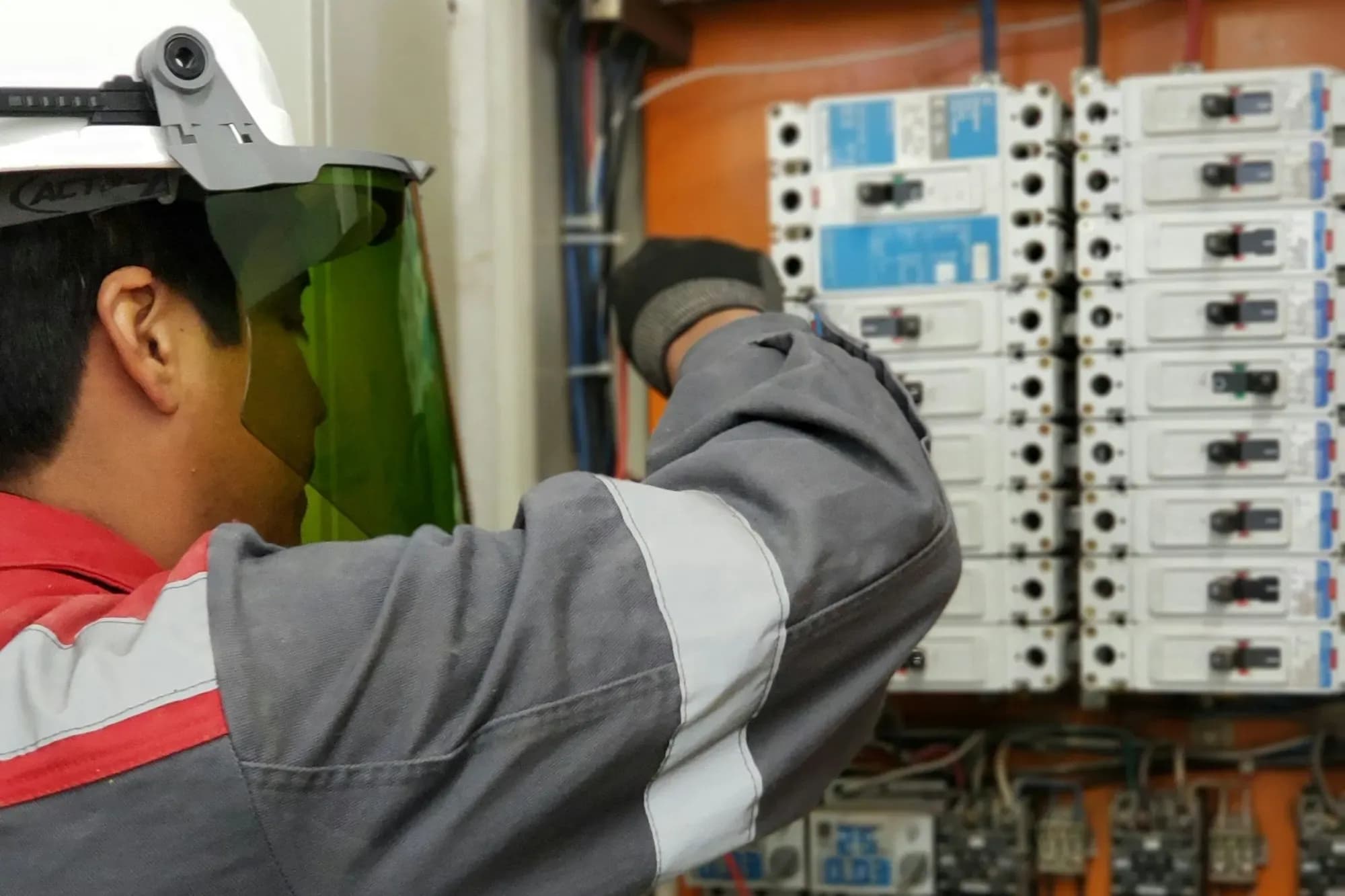
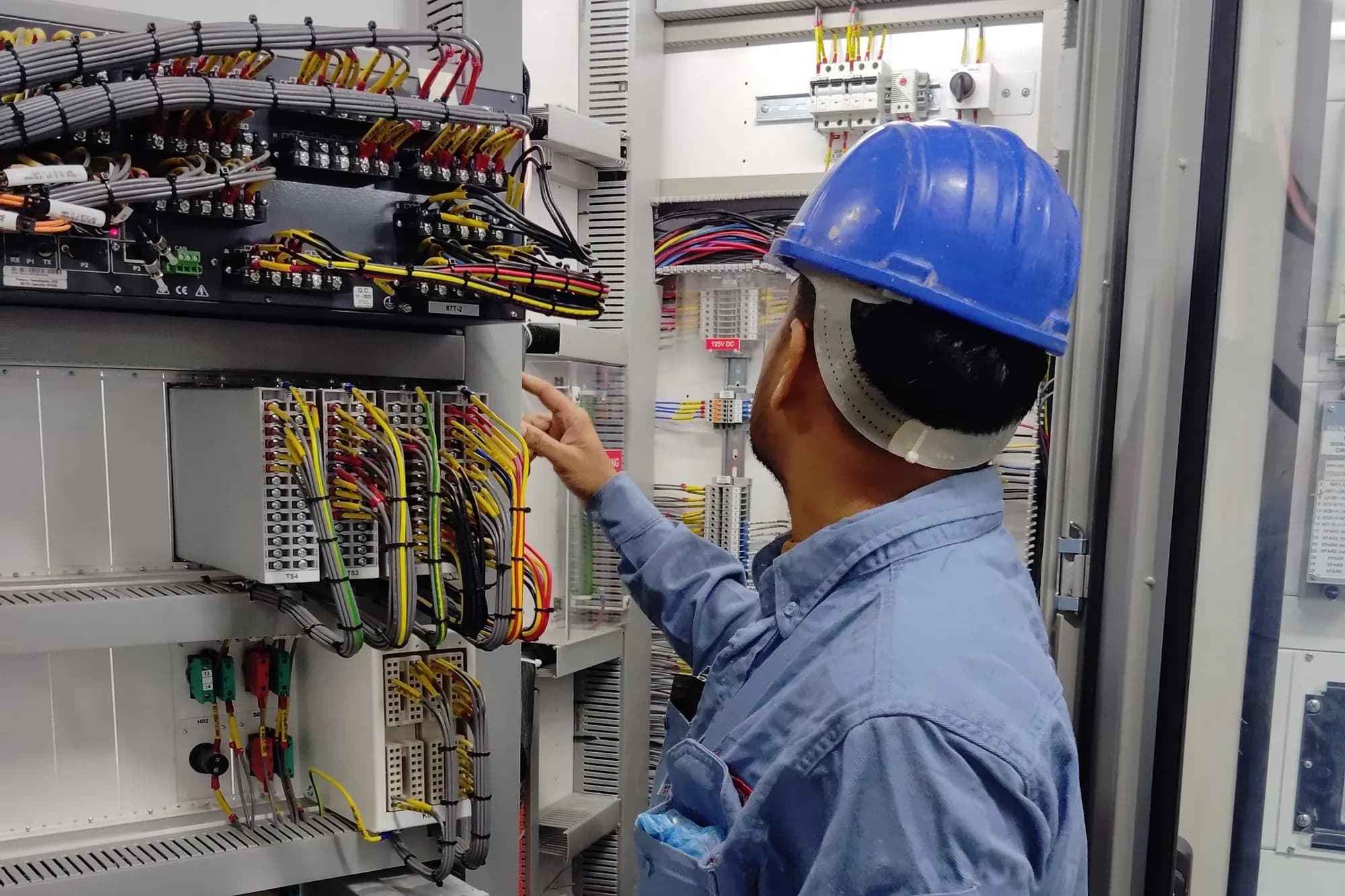
A job simulation is a working day at a simulated UK company. You clock in, join the morning meeting, work through real project documents and tickets, write your end-of-day report and clock out. A day takes 30 to 45 minutes. It is practice, not a real job, and it is free to start.
Free
5 days, 3 to 4 hours
Premium, optional
20 days, 12 to 15 hours
A working day
30 to 45 minutes
Roles
23
Certificate £14.99, optional. Premium £53.99, optional. Prices include VAT. A job simulation is practice at a simulated company, not employment.
Search, filter, or let the helper pick. Choose Free or Premium: the roles are the same, and you can start on any date. There is no application and no deadline.
Free means free: no card, nothing to buy. Days 1 to 5 of every role.
Try the job before you applySpend a working day, then another, in a junior role and see whether you like the work. A day is 30 to 45 minutes.
A real working dayClock in, join the morning meeting, work your tickets, write the end-of-day report, plan tomorrow, clock out.
A manager who plans with youOn day 1 your manager checks what you know and makes a learning plan. Help opens only where you need it.
Real project documentsDrawings, procedures, work orders and specifications with proper title blocks, written the way a working team writes them.
Every ticket markedYou get feedback on each hand-in and a model answer when you finish it.
Colleagues you can askAI colleagues with names, roles and faces, always labelled as simulated. They explain and point you to the right document; they do not hand out answers.
A work pack you keepA PDF and a zip with your documents, timesheet and skills before and after, plus a final review and a manager's letter written by AI and labelled.
Free to start5 working days free, about 3 to 4 hours. No card to start.
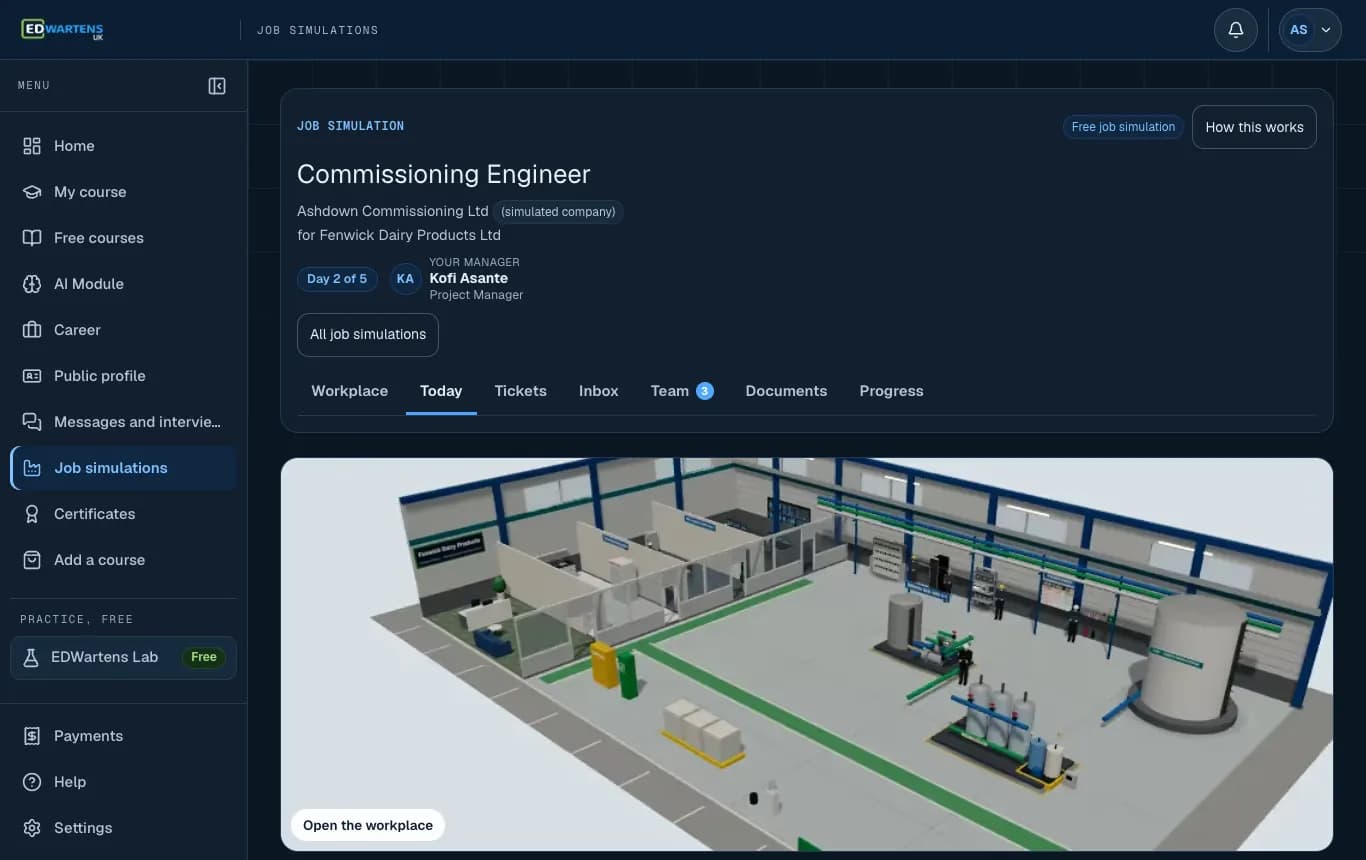
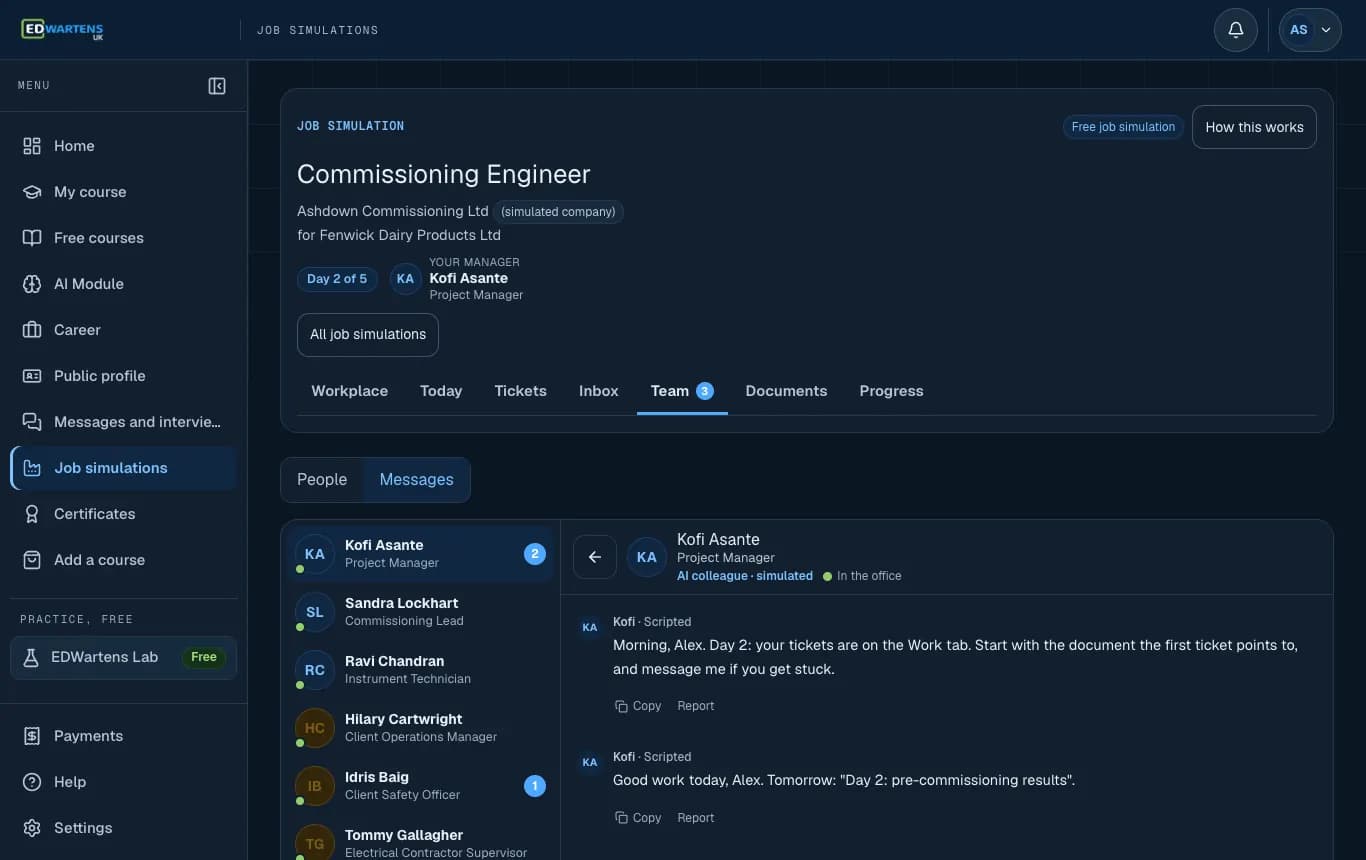
Commissioning Engineer · Day 2 of 5 · simulated company
A screen from the simulator. The company, the people and the data are fictional.
How it works
A working day, from clock in to clock out
A working day takes 30 to 45 minutes. Free is 5 working days, about 3 to 4 hours in all. Premium is 20 working days, about 12 to 15 hours. Do one day at a time, or several days in one sitting. A day opens when you have finished the one before, and there is no deadline.
1Clock inBadge in at the start of your working day. Your time is logged from clock in to clock out.
2Morning meetingA toolbox talk, stand-up or handover brief, depending on the role, with a safety point for the day and what is planned.
3Do the day's workOpen the day's email, read the documents and work through your tickets. Each one is checked when you hand it in.
4Report and plan tomorrowWrite the end-of-day report your role uses (a shift handover, a daily progress report or a status update), then choose tomorrow's priorities.
5Clock outClock out and see your day summed up. Carry on to the next day, or stop for today and come back.
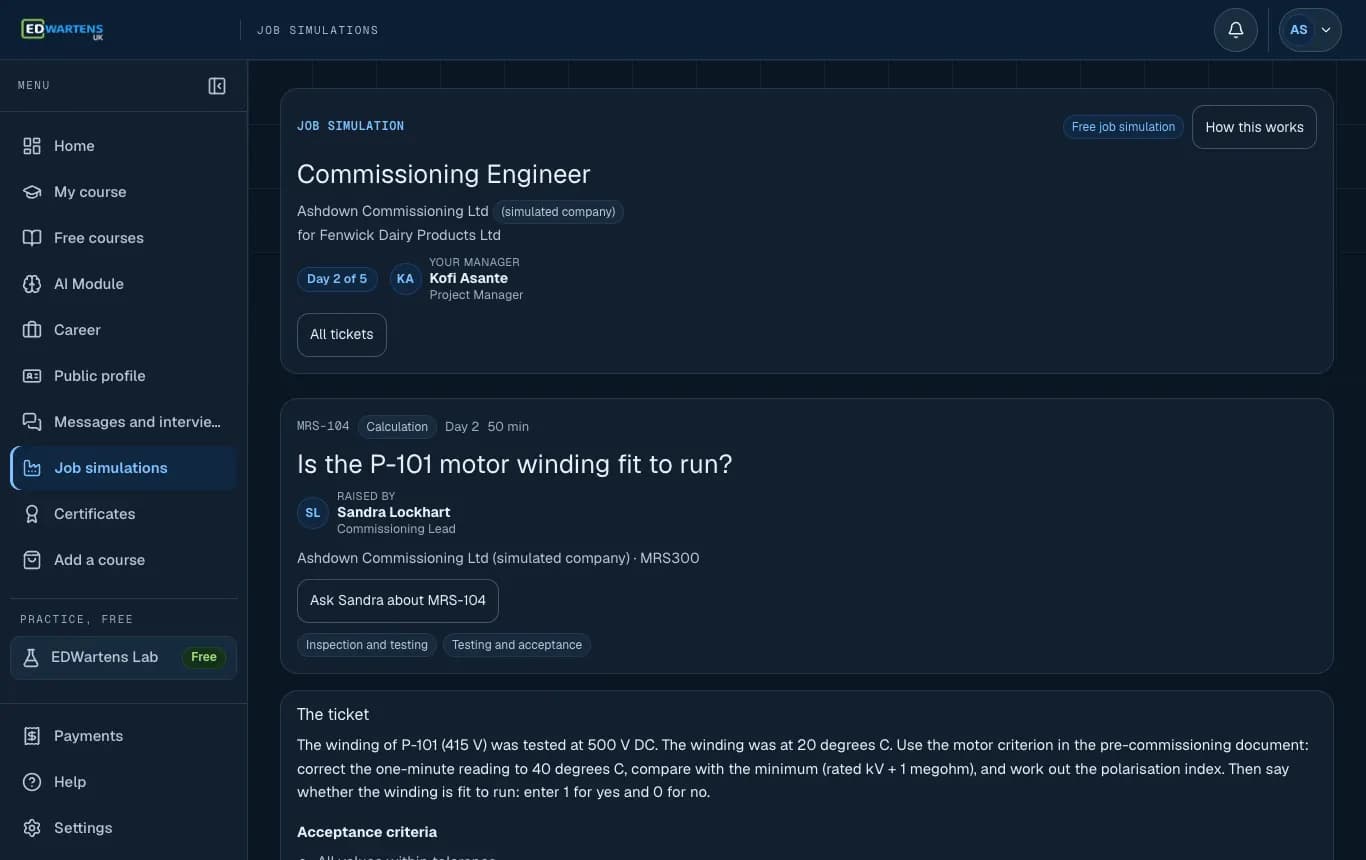
A ticket, written the way a colleague would write it
Day 1
Your manager checks what you know
So that you get the right work, and help only where you need it.
1Your manager asks what you knowOn day 1 you rate yourself on about eight skills for the role, from never done it to could teach it. Your manager then asks two short "show me" questions on the skills you rated highest.
2A learning planFrom your answers your manager writes you a learning plan. The plan uses AI and is labelled. It only uses your own results and the tickets and free courses on this page.
3Help only where you need itA "How to do this" panel opens on tickets that use a skill you rated low. Where you have shown you know a skill, the help stays folded away, and you can open it any time.
4Check-ins along the wayIn Premium your manager also checks in on days 5, 10 and 15, moving your skill levels up or down on the evidence of your work.
The team · simulated colleagues, always labelled
What you work on and what you keep
Named projects, proper documents and a work pack
1One or two named projectsEach role has one or two named projects at the simulated company, with milestones by working day. You always know what you are working towards, and at the end you can explain what you delivered.
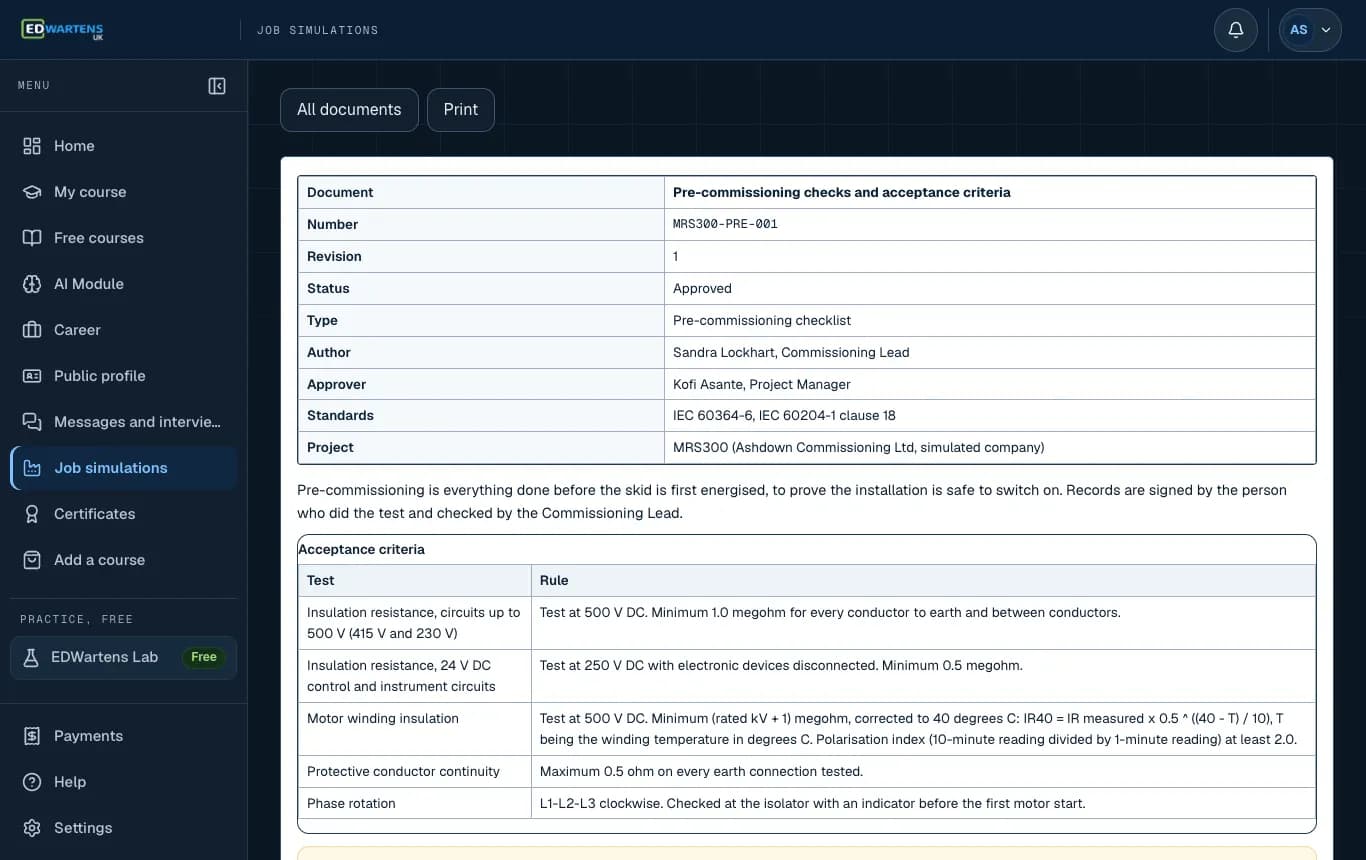
2Documents with title blocksCompany documents carry a proper title block: company, project, document number, revision, status, and who prepared, checked and approved them. What you hand in is a controlled document too, with a number and a revision.
3A work pack you keepYour work pack is yours to keep, as a PDF and a zip. It holds the project file, your deliverables, the company documents for your edition, your timesheet, your skills before and after, your manager's letter and a link to your certificate if you buy one.
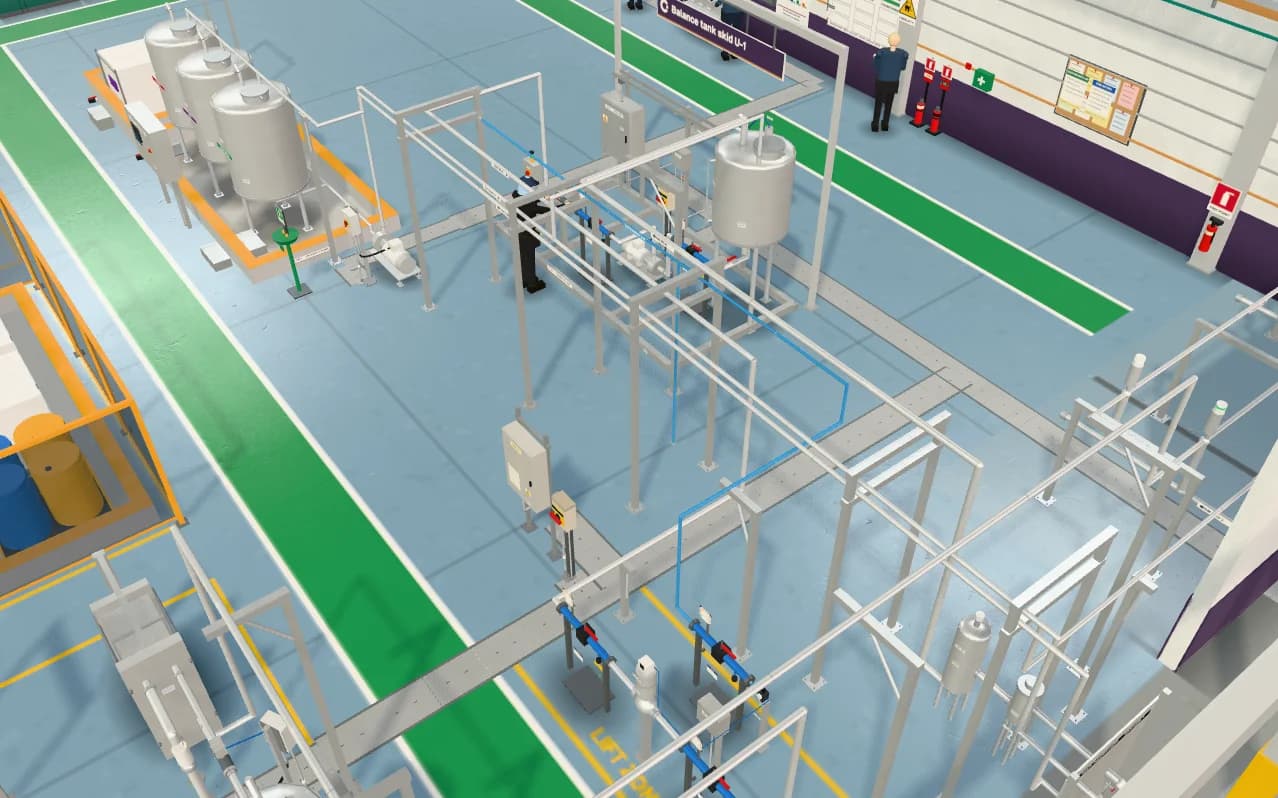
4The workplaceYou walk around a 3D workplace at the simulated company, with colleagues at their desks and the machines in the room. Colleagues have names, roles and faces, always labelled as simulated.
5AI colleaguesYour colleagues are AI, with names, roles and faces, always labelled as simulated. They help you think a ticket through, and they do not hand out the answer.
6Hands-on tickets (UK)Real lab machines stand in the workplace, and the hands-on tickets point to the matching EDWartens Lab exercise. In the UK edition you do the lab exercise yourself, tick a checklist and hand in your notes and figures. It is a self-review hand-in. The lab does not mark you or send us a result.
A project document with a proper title block
How it ends
1A final reviewAfter you clock out on day 5 (Free) or day 20 (Premium), your manager reviews the work with you. You rate the same skills again and see a before and after table.
2What you deliveredThe projects you delivered, three strengths and two next steps. The strengths and next steps are chosen by rule from your results.
3A manager's letterA short letter about your work, written by AI from your results in the voice of your simulated manager. It is labelled "Written by AI from your results".
4Your work packThen you badge out, and your work pack is ready on your account.
Free, Certificate, Premium
What is free and what is optional
Nothing is sold inside the work. The certificate and Premium are optional, and every price includes VAT.
Free, Certificate and Premium job simulation compared
What
Free
Certificate (optional)
Premium (optional)
Price, VAT included
Free
£14.99
£53.99
Length
5 working days, about 3 to 4 hours
For the days you complete
20 working days, about 12 to 15 hours
Checked tasks and model answers
Graded, verifiable certificate
Capstone reviewed by an engineer
What you get
Every ticket of the first week, checked as you hand it in, with model answers
Five working days (about 3 to 4 hours), clock in to clock out
Your manager's day-1 skills check and learning plan
Project documents with proper title blocks
Your work pack (PDF and zip) and a final review
A graded, verifiable certificate with your score and band
A public verification page and QR code
The details to list it on LinkedIn under Licences & certifications, ready to copy
Working days 6 to 20 (about 12 to 15 hours in all): change requests, site work, faults and handover
A capstone deliverable reviewed by an engineer
An AI viva on your own work
The graded certificate and a work record PDF with your skill scores
Buy the certificate first and Premium credits it: you then pay £39.00. Nothing is sold inside the work. Certificates are issued by WARTENS LTD and are not accredited qualifications. Job simulation certificate: how it works.
Before you pay you accept our terms and confirm that you want the digital service straight away. Once it is supplied, the 14-day right to cancel ends. See our cancellation and refund policy.
Included with every paid course
Enrol on a course and the matching simulations come with it
Every paid EDWartens UK course includes the Premium edition and certificate for the simulations that match it (Premium is £53.99 including VAT on its own). Nothing extra to buy.
Data Analyst, AI and LLM Application Engineer, Machine Learning Engineer, Computer Vision Engineer, AI Business Analyst
A simulation is training at a simulated company, not employment or a work placement. Compare all courses.
A day in a simulation
Then the day's work: an email and a ticket
After the morning meeting, the day's work arrives as an email and tickets. This is a real email and a real ticket from the PLC Programmer job simulation. Every role works this way.
Welcome to the team. You are the junior PLC programmer on project BFL-200, the control upgrade of bottling line 2 for Larkfield Drinks. The Lead Engineer owns the software and you report to them.
How we work here: tickets have a number (BFL-101 and up) and acceptance criteria. Documents carry a number and a revision letter and we never overwrite an old revision. At the end of each day send a three-line status: done, doing next, blocked. Questions to the client go through the query log, not by phone.
Site rules and our project standards are on one page in the attachment. Read it before anything else.
BFL-101 Ticket
Site induction and project standards
Raised by: Client Safety Officer
Before anyone from Tarnbrook Controls touches line 2, the client's Safety Officer wants proof that you have read the site rules and understand the standards the project follows. The questions come from the one-page site rules and standards sheet (BFL200-HSE-001). Take your time: on a real site a wrong answer here is a wrong action later.
Acceptance
At least 60 percent correct.
You can say why each right answer is right.
Compare
Job simulation, virtual work experience or a placement?
The three get mixed up. They are different things, and all three have a place. Here is how they differ.
Job simulation, virtual work experience and a real placement compared
Question
EDWartens job simulation
Virtual work experience
Real placement or internship
What it is
A working day at a simulated company: clock in, meeting, tickets, report, clock out
Online programmes that introduce a job or sector, run by many providers
Time inside a real employer, with real colleagues
Is it employment?
No
No
A placement is not always paid; an internship usually is
Who checks your work
Each task is checked as you hand it in, with a model answer
Varies by provider: some self-check, some give feedback
A supervisor, in real work
Length
30 to 45 minutes a day. Free is 5 days (about 3 to 4 hours); Premium is 20 days (about 12 to 15 hours)
Varies, often a few hours to a few days
Days to many months
What you keep
A work pack (PDF and zip) and your work record; an optional certificate with a public verification page
Often a certificate of completion; check what each provider says
A reference, if you earn one
Best for
Trying a junior engineering or AI role and having something specific to show
A practice simulation of a junior role at a simulated company.
30 to 45 minutes a day, with real project documents and checked work.
Something specific to show and talk about: your work pack and, if you want it, a verifiable certificate.
What it is not
Not employment, an internship or a work placement. No employer is involved.
No promise of a job, an interview or any result.
Not an accredited or regulated qualification, and it does not lead to an ECS card, a licence or a registration.
The company, clients, colleagues and their portraits are fictional.
Written for the UK
UK settings and the standards you will hear about
The simulated companies are UK-style employers, the money is in pounds, and the work names the standards a UK engineer meets: for example BS 7671, IEC 61131-3, PUWER 1998, CDM 2015, DSEAR and ATEX, IEC 62443 and ENA G98 and G99, depending on the role.
Each role page lists the UK standards and regulations for that role, for awareness. The tasks use simplified data, so always read the current edition of anything you rely on.
Schemes such as the ECS card and CompEx are described so you know they exist. A job simulation does not lead to them.
UK pay appears only where we can give a dated, sourced figure. Otherwise we leave it out.
The certificate is issued by WARTENS LTD. It is not an accredited or regulated qualification.
A job simulation is a working day at a simulated UK company. You clock in, join the morning meeting, work through real project documents and tickets, write your end-of-day report and clock out. A day takes 30 to 45 minutes. It is practice, not a real job, and it is free to start.
What does a working day look like?
A working day at a simulated company: you clock in, join the morning meeting, work through the day's tickets, write the end-of-day report, plan tomorrow and clock out. It takes 30 to 45 minutes. Do one day at a time, or several days in one sitting. A day opens when you have finished the one before, and there is no deadline.
Is a job simulation a real job, an internship or work experience?
No. It is a practice simulation of a junior role at a simulated company. It is not employment, an internship, a work placement or a job offer, no employer is involved, and we do not promise a job or an interview.
Is it really free to start?
Yes. Days 1 to 5 are free: the working days, the tickets, the documents, your manager's skills check, checking and model answers, your work pack and a final review. The certificate (£14.99) and Premium (£53.99) are optional. Both prices include VAT.
How long does it take?
A working day takes 30 to 45 minutes. Free is 5 working days, about 3 to 4 hours in all. Premium is 20 working days, about 12 to 15 hours.
What do I keep at the end?
Your work pack is yours to keep, as a PDF and a zip. It holds the project file, your deliverables, the company documents for your edition, your timesheet, your skills before and after, your manager's letter and a link to your certificate if you buy one. Your final review also shows your skills before and after.
Can I put it on my CV?
Yes, as a job simulation with the simulated company named. List it under projects or training, not as employment. The hours on your record are active hours you spent on EDWartens, not hours at a company.
Is the company real?
No. Every company, client and site is fictional and is always shown as a "simulated company". Your colleagues are fictional AI characters with names, roles and faces, always labelled as simulated.
Is this the Job Simulator video game?
No. A job simulation here is a working day at a simulated UK company, with real project documents, tickets and checked work. It is not a game or a VR experience, and it is practice, not employment.
Is the certificate an accredited qualification?
No. It is a certificate of a training project, issued by WARTENS LTD. It is not an accredited or regulated qualification, and it does not lead to an ECS card, a licence or a registration. You can check any certificate on its verification page or by scanning its QR code.
Honest limits
A job simulation is a realistic training project at a simulated company. It is not employment, an internship or a work placement, and it is not a job offer. Hours are active hours the learner logged on EDWartens UK.
We do not promise a job, an interview or a result. Content reviewed 24 Oct 2026.
Pick a role and start free
Days 1 to 5 cost nothing. Premium runs to day 20 and the certificate is optional. Practice, not employment.