







Free job simulation · AI and data

Data analyst job simulation: clean messy data and present the answer

A data analyst job simulation is a set of working days at a simulated company that mimic the first weeks of the role. You receive a vague question, profile and clean messy files, reconcile two sources that disagree, analyse the result and present a recommendation. It is practice evidence, not employment. This version uses an online retailer's order and customer files, and ends with a pack you can show.

You join Fernhollow Home Ltd (simulated company), a online homeware retailer in Manchester. A working day takes 30 to 45 minutes. Days 1 to 5 are free, about 3 to 4 hours in all. Premium continues to day 20, about 12 to 15 hours. It is practice, not employment.

Days 1 to 5 are free. You need a free account and no card. Create an account. Or try the 3-minute demo (opens in a new tab), with no account.

Free
5 days, 3 to 4 hours
A working day
30 to 45 minutes
Project documents
9
Certificate, optional
£14.99
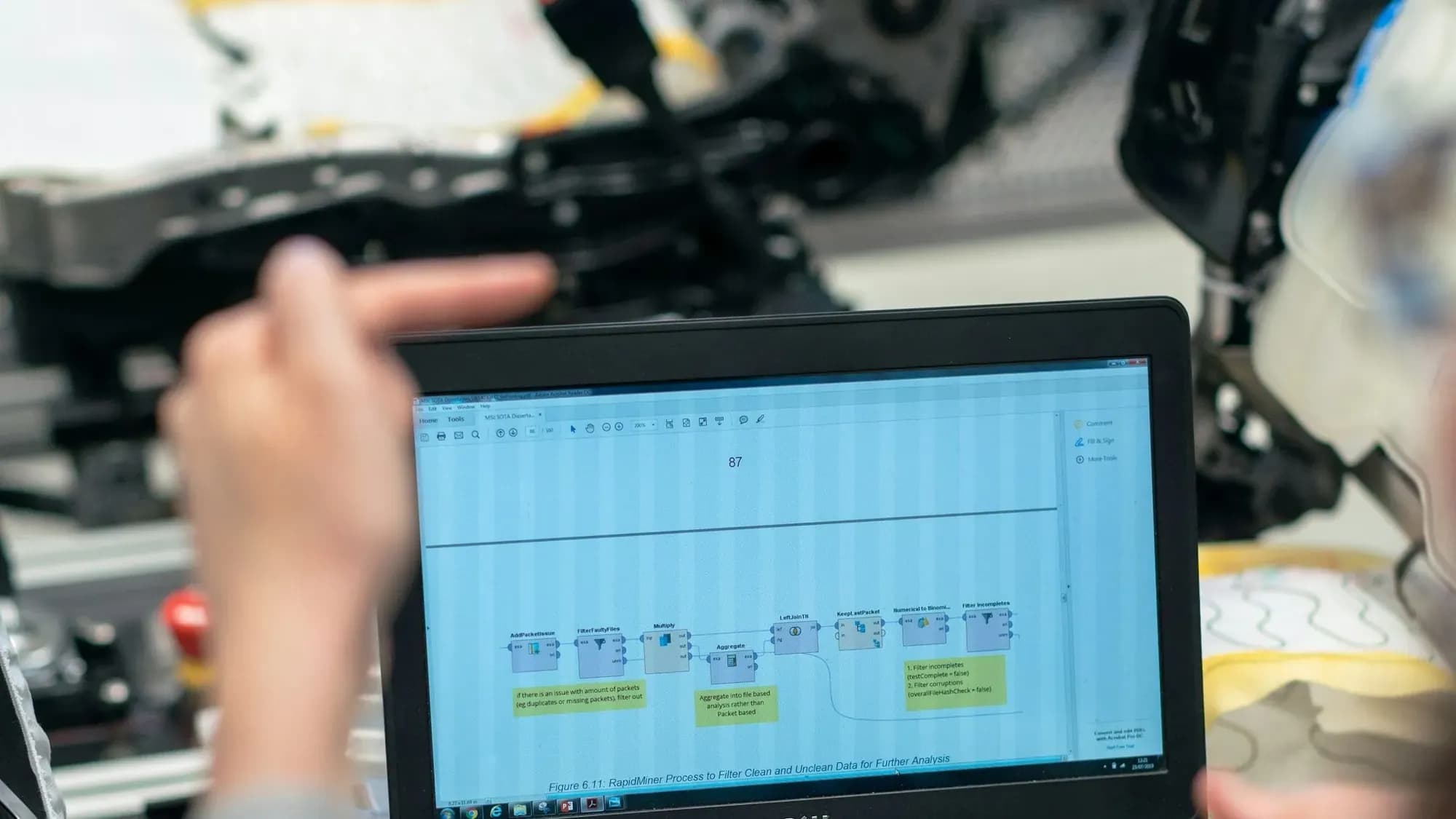
Hands pointing at a process-analysis workflow on a laptop screen beside a test rig

The project

You join Fernhollow Home Ltd (simulated company)

Fernhollow Home Ltd (simulated company) is a online homeware retailer in Manchester. You help its team deliver a project for Customer Growth team, at Fernhollow Home head office (internal client, ticket DATA-142).

You are the junior analyst in the insight team at Fernhollow Home, an online retailer. The Head of Customer Growth wants to know why repeat orders fell in September before deciding where to spend the autumn retention budget. You get four real-looking data files with planted problems, a data dictionary with gaps, a query that nobody has reviewed and tickets with acceptance criteria. Over four weeks you profile and reconcile the data, log its quality, meet a stakeholder who changes a definition mid-way, find that a CRM merge has inflated the problem, test what is real, build a bridge from the dashboard to finance, resist two requests that would harm the work, and hand over a pack. Some pressure comes from senior people. Your job is to be useful and honest at the same time.

What you will do

  • Profile real-looking files and log data quality problems with exact counts
  • Reconcile two sources that disagree and explain the gap to the last order and the last pound
  • Handle a stakeholder who redefines a KPI, a CRM merge that duplicates customers and a tracking outage
  • Test whether a fall is real, say plainly when it is not significant, and refuse to overclaim
  • Hand over a pack of method, definitions, memo and dashboard review that someone else can repeat

The people you deal with

  • Head of Analyticscompany
  • Senior Data Analystcompany
  • Data Engineercompany
  • Head of Customer Growthclient
  • Finance Analystclient
  • CRM Ownerclient
  • Operations Managerclient
  • Data Protection Leadcompany

The company, client and site are fictional. The people are fictional too.

Look inside

What the simulator looks like

The workplace, your tickets, the documents and the team chat, as a learner sees them.

  • The workplace of the simulated company in the Data Analyst job simulation
    Start in the workplace, with the team around you.
  • The Today screen of the Data Analyst job simulation: the morning email and the day's tickets
    Today: the morning email and your tickets for the day.
  • The Work screen of the Data Analyst job simulation, listing tickets by day
    Work: every ticket, by day, with its status.
  • A ticket in the Data Analyst job simulation with its brief and acceptance points
    A ticket, written the way a colleague would write it.
  • A project document in the Data Analyst job simulation with number, revision and status
    A project document with its number, revision and status.
  • The Team screen of the Data Analyst job simulation with a chat open with an AI colleague
    Ask a colleague. They are AI colleagues: they help you think, they do not hand out answers.

Screenshots from the simulator. Company, people and data are fictional and always labelled as simulated.

Meet the team

The colleagues you work with

You can read their messages and ask them questions. They are AI colleagues with names, roles and faces, always labelled as simulated. They help you think a ticket through; they do not hand out its answer.

  • Portrait of Harpreet Sandhu, an AI colleague (simulated)Harpreet SandhuHead of AnalyticsSimulated colleague, company side
  • Portrait of Amara Okoro, an AI colleague (simulated)Amara OkoroSenior Data AnalystSimulated colleague, company side
  • Portrait of Piotr Wisniewski, an AI colleague (simulated)Piotr WisniewskiData EngineerSimulated colleague, company side
  • Portrait of Kit Vasquez, an AI colleague (simulated)Kit VasquezFormer analystSimulated colleague, company side
  • Portrait of Esther Plummer, an AI colleague (simulated)Esther PlummerData Protection LeadSimulated colleague, company side
  • Portrait of Francesca Rossetti, an AI colleague (simulated)Francesca RossettiHead of Customer GrowthSimulated colleague, client side
  • Portrait of Dominic Parry, an AI colleague (simulated)Dominic ParryFinance AnalystSimulated colleague, client side
  • Portrait of Ruth Sutcliffe, an AI colleague (simulated)Ruth SutcliffeCRM OwnerSimulated colleague, client side

Fictional people, with simulated faces.

What you get

What you walk away with

Answer a real business question with messy data: profile, reconcile, check queries, test a change and write the pack.

Roles to look for

  • Data Analyst
  • Junior Data Analyst
  • Insight Analyst
  • Reporting Analyst
  • Business Intelligence Analyst

742 live openings on the UK jobs board, checked 15 Nov 2026. See the jobs

Your proof

  • Your work pack, as a PDF and a zip, with your documents, timesheet and skills before and after.
  • A certificate anyone can verify. Optional, and included in Premium.
  • An entry on your EDWartens profile under Work experience, marked as a job simulation.
  • A work record with your skill scores, with Premium.

What you can talk about at interview

  • You can explain how you profiled four messy files and what you found before you trusted any of them.
  • You can walk through reconciling two sources and why you reported the gap instead of picking one.
  • In Premium, you can talk through a changed KPI definition, a significance test and a request to share a customer list.

Day by day

Your 5 free days, and the project they build

Each working day takes 30 to 45 minutes: clock in, a morning meeting, your tickets, an end-of-day report, clock out. Do a day at a time or several in one sitting. On day 1 your manager checks what you know and plans your learning. Every ticket is checked, and you see the model answer after it.

DATA-142: why repeat orders fell in September

For Customer Growth team (fictional)

The Head of Customer Growth must decide where to spend the autumn retention budget, and repeat orders fell in September. This project, ticket DATA-142, finds out whether the fall is real and why. Done means checked data, agreed KPI definitions, a plain findings memo and a dashboard review, all repeatable by another analyst.

In scope for you

  • Profile the four files and log data quality problems with counts
  • Reconcile the shop system against finance
  • Test whether the fall is real and say so plainly if it is not
  • Control the KPI definition change CR-02 and the CRM merge damage
  • Hand over the method, definitions, memo and dashboard review

You hand over

  • Data profile of the four source filesData profile
  • Reconciliation of orders: shop system against financeSource reconciliation
  • Data quality checks loggedData quality log
  • Impact note for a metric change requestChange controlPremium
  • Final KPI definition sheetKPI definition sheetPremium
  • Analysis pack for the retention questionAnalysis packPremium
Milestones in the free days

  1. By day 2Four files profiled, orders reconciled, repeat-rate query reviewedDATA-142: why repeat orders fell in September
  2. By day 5Active customers counted, quality checks run, status email sentDATA-142: why repeat orders fell in September

Tickets, day by day

  1. Day 1

    2 tickets
    • Induction: working standards and personal dataQuiz
    • Profile the four filesTable
  2. Day 2

    2 tickets
    • Reconcile August orders: shop system against financeCalculation
    • Review the repeat-rate queryDocument review
  3. Day 3

    3 tickets
    • Count active customers: v1 and v2Calculation
    • The definition changes: what happens to the dashboard?Decision
    • Lab: data health check on a customer tableHand-in
  4. Day 4

    2 tickets
    • Run the eight data quality checksTable
    • How much damage did the CRM merge do?Calculation
  5. Day 5

    2 tickets
    • Fill the blank sources with "email"?Decision
    • End-of-week status emailWriting

On day 5 you clock out and your manager does a final review with you, and your work pack is ready: the free days, in about 3 to 4 hours.

Premium: days 6 to 20about 12 to 15 hours with the free days

After day 5 the project goes on with a change request, site work, faults, a handover and a capstone reviewed by an engineer. Your manager also checks in on days 5, 10 and 15, and the final review comes after day 20.

  1. By day 10Repeat rate by region, tracking outage and CR-02 handled, fall testedDATA-142: why repeat orders fell in September
  2. By day 15Dashboard bridged to finance, data request handled, KPI sheet finalisedDATA-142: why repeat orders fell in September
  3. By day 20Findings memo checked, one-page note written, analysis pack deliveredDATA-142: why repeat orders fell in September

See the Premium plan

  1. Day 6

    2 tickets
    • "Just give me the number by noon"Decision
    • Repeat customer rate by region, August and SeptemberTable
  2. Day 7

    1 ticket
    • Conversion rate and the tracking outageCalculation
  3. Day 8

    1 ticket
    • Impact note for change request CR-02Writing
  4. Day 9

    1 ticket
    • Recalculate the repeat customer rate under v3Calculation
  5. Day 10

    2 tickets
    • Is the London fall real? A two-proportion z-testCalculation
    • Lab: check an AI campaign report and read out its A/B testHand-in
  6. Day 11

    1 ticket
    • Bridge the dashboard revenue to the finance figureTable
  7. Day 12

    1 ticket
    • Do January and March customers come back?Calculation
  8. Day 13

    1 ticket
    • The agency wants the customer list in the next hourDecision
  9. Day 14

    1 ticket
    • Review the dashboard specification before go-liveDocument review
  10. Day 15

    1 ticket
    • Finalise the KPI definition sheetTable
  11. Day 16

    1 ticket
    • Check the draft findings memoDocument review
  12. Day 17

    1 ticket
    • The one-page note for the Head of Customer GrowthWriting
  13. Day 18

    1 ticket
    • Capstone: the analysis pack for DATA-142Hand-in
  14. Day 19

    1 ticket
    • Handover email to the Head of Customer GrowthWriting
  15. Day 20

    1 ticket
    • A conversation about your own workViva

Your workplace

Where you work, and with what

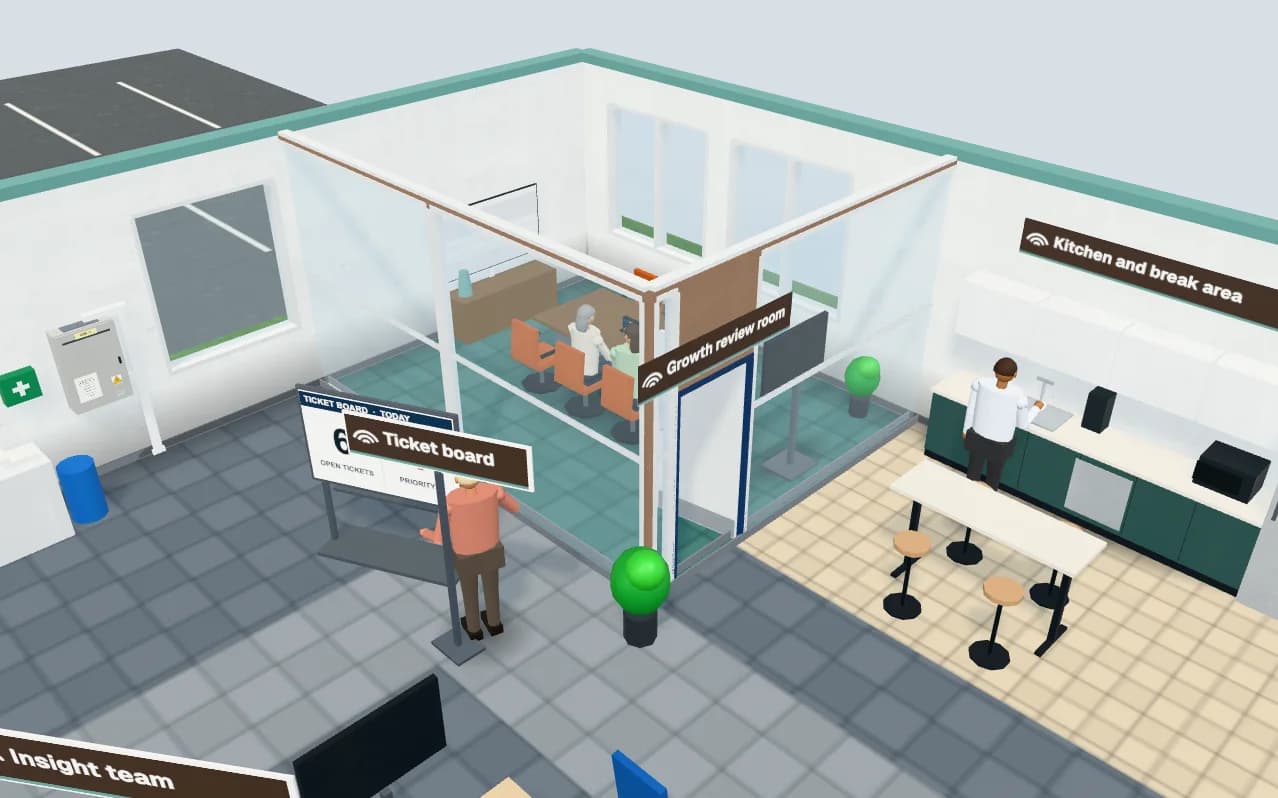
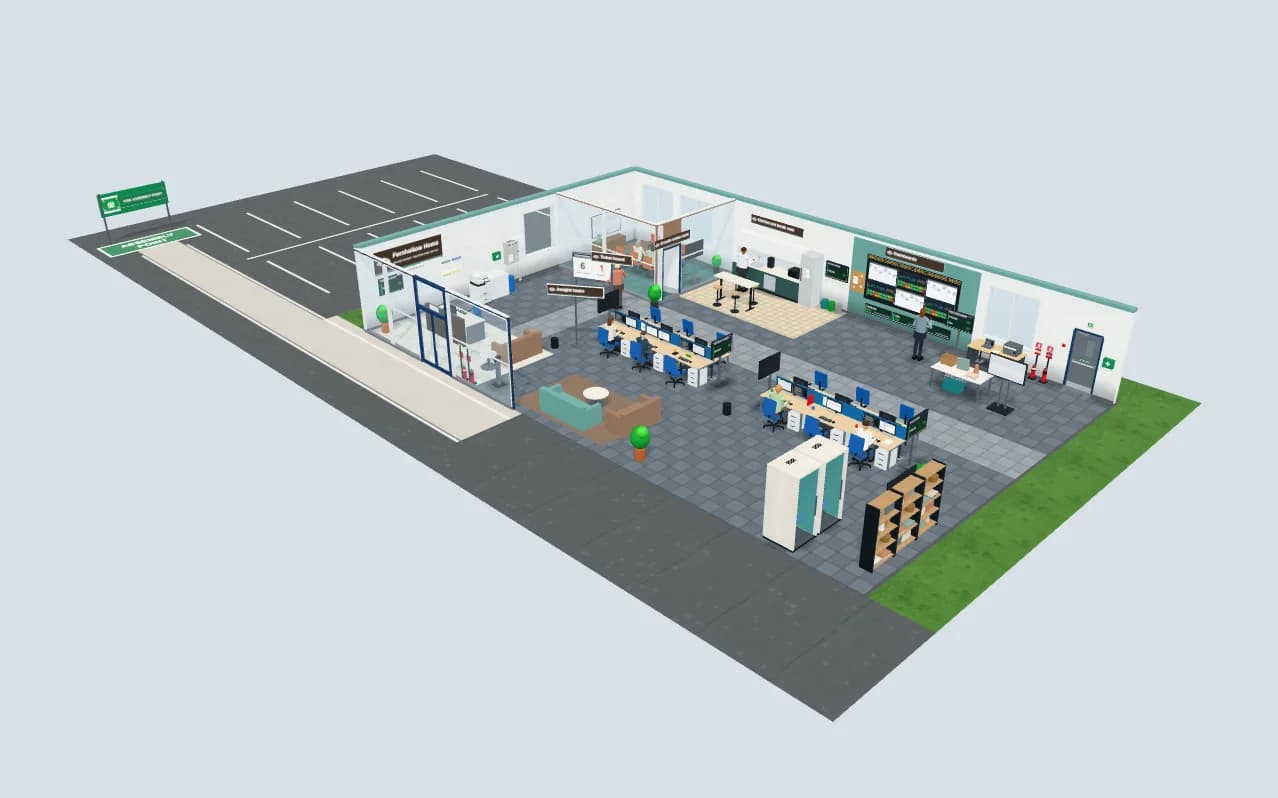
You work in a technology office: Fernhollow Home (simulated company), Head office, insight team floor. It is a 3D room with your colleagues in it.

Hours and rhythm

Days, 09:00 to 17:30, Monday to Friday, with flexible home days agreed with your buddy (simulated)

  • 09:00 team stand-up at the ticket board
  • 09:15 read Amara's morning email and your tickets
  • 13:30 query and review slot with Amara
  • 17:00 update your tickets and the decision log

You clock in and out of every day. The simulated clock runs faster between events, so a day takes 30 to 45 minutes of real time.

Machines and equipment

Real lab machines stand in the workplace, and the hands-on tickets point to the matching EDWartens Lab exercise. In the UK edition you do the lab exercise yourself, tick a checklist and hand in your notes and figures. It is a self-review hand-in. The lab does not mark you or send us a result.

Systems and kit

Insight ticket tracker (simulated). Each request is a ticket such as DATA-142 with acceptance criteria. You read it, do the work, hand it in and Amara reviews it against the team standards.

PPE on site: Staff pass worn visibly, Laptop screen lock when you leave your desk, Headphones for calls in the open area.

The 3D workplace of the simulated company in the Data Analyst job simulation
The simulated workplace you walk around. The company and the people are fictional.

Skills checked

The skills your manager checks

On day 1 you rate yourself on about eight skills for the role, from never done it to could teach it. Your manager then asks two short "show me" questions on the skills you rated highest. The same skills are rated again at the final review, so you see a before and after.

  • Analysis and statistics
  • Data cleaning and quality
  • Written communication
  • SQL and querying
  • Presenting findings
  • Data protection and privacy
  • Working with clients and stakeholders
  • Applying standards

A "How to do this" panel opens on tickets that use a skill you rated low. Where you have shown you know a skill, the help stays folded away, and you can open it any time.

Real documents

The documents you will work with

Each one has a title block with a number, a revision, a status and who prepared, checked and approved it, the way a project document does. You read them, check them and write your own, and what you hand in becomes a controlled document too. Everything is kept in your work pack.

  • DATA-TKT-142

    Ticket DATA-142: why did repeat orders fall in September?

    Rev ATicket

  • DATA-STD-001

    Insight team working standards (one page)

    Rev BStandard

  • DATA-DDC-001

    Data dictionary for the retention analysis

    Rev 0.3Data dictionary

  • DATA-KPI-001

    KPI definition sheet

    Rev AKPI definitions

  • DATA-KPI-001

    KPI definition sheet, with active customer v2

    Rev BKPI definitions

  • DATA-SQL-001

    q_repeat_orders_v2.sql

    Rev BSQL query file

  • DATA-DQL-001

    Data quality log

    Rev AData quality log

  • DATA-ARC-001

    Data flow for the retention analysis

    Rev AData flow diagram

  • DATA-REQ-001

    Analysis request and scoping form (blank)

    Rev ARequest form

Documents that arrive in Premiumchange requests, records, handover
  • DATA-CHG-002

    Change request CR-02: repeat customer rate v3

    Rev AChange requestPremium

  • DATA-KPI-001

    KPI definition sheet, with repeat customer rate v3

    Rev CKPI definitionsPremium

  • DATA-FIN-001

    Finance monthly revenue summary, September

    Rev AFinance reportPremium

  • DATA-DSH-001

    Dashboard specification: customer health

    Rev ADashboard specPremium

  • DATA-MEM-001

    Findings memo: repeat customers in September

    Rev AFindings memoPremium

  • DATA-HOV-001

    Handover pack requirements

    Rev AHandover indexPremium

  • DATA-DEC-001

    Decision log

    Rev CDecision logPremium

Tools

In the industry, and here

Tools in the industry and what you use here
In the industryHere
SQL client or a database toolYour own SQL tool, such as an in-browser or desktop SQL engine, on the downloaded files
Spreadsheet (pivot tables, lookups)Your own spreadsheet, on the same CSV files
Python with pandas or R for cleaning and statisticsYour own notebook; every answer can also be found with SQL or a spreadsheet
Dashboard tool and a ticket trackerA dashboard specification you review, and numbered tickets in the inbox

Standards

The standards the work follows

  • CRISP-DM
  • DAMA data quality dimensions
  • UK GDPR

In the UK

The Data Analyst role in a UK setting

Who employs this kind of engineer: Retailers, banks, insurers, utilities, the NHS, local and central government, consultancies and software companies.

Where: Analyst roles are advertised in every UK region, and many are hybrid or remote. This is context, not a statement about vacancies.

UK standards and regulations to know about

  • UK GDPR and the Data Protection Act 2018

    The rules for personal data. The ICO publishes guidance, including on AI and data protection.

  • ICO guidance on anonymisation

    How to share and analyse data about people without identifying them.

  • Government Analysis Function standards

    Standards for analysis in UK government, useful context for public sector roles.

  • CRISP-DM

    A common process model for data projects.

These are named so that you recognise them. A job simulation does not teach them as a qualification, the tasks use simplified data, and you should always read the current edition of anything you rely on.

Your proof, optional

A certificate you can verify

The free days are free. The graded, verifiable certificate is an optional extra, and it is included in Premium.

  • A graded, verifiable certificate with your score and band
  • A public verification page and QR code
  • The details to list it on LinkedIn under Licences & certifications, ready to copy
  • Issued by WARTENS LTD. It is a training certificate, not an accredited qualification, and the company is simulated

Optional: £14.99 including VAT, once you pass.

Sample

Job Simulation Certificate

Your name

completed the Data Analyst job simulation at Fernhollow Home Ltd (simulated company). Your score and band are shown on the real certificate.

Number
EDW-JS-0000
Issued by
WARTENS LTD

Not an accredited qualification. A verification page and QR code are printed on the real certificate.

Premium

Want the full project, reviewed by an engineer?

Premium runs to day 20, about 12 to 15 hours in all, and includes the graded certificate. Your free days carry over, and nothing you did is lost.

£53.99 including VAT, one payment. If you have bought the certificate, you pay £39.00.

  • Working days 6 to 20 (about 12 to 15 hours in all): change requests, site work, faults and handover
  • A capstone deliverable reviewed by an engineer
  • An AI viva on your own work
  • The graded certificate and a work record PDF with your skill scores

Prepare

Free courses and labs that get you ready

Linked from the tickets that need them. You can read them before you start.

Free courses

A course that goes with this role

AI Module

A paid, self-paced course in AI and machine learning for industry: 83 lessons, 5 graded projects and career sessions. It is a separate product: you do not need it to finish the job simulation, and it does not lead to a job. The certificate is a certificate of completion, not a regulated qualification.

Price
£2,688 including VAT (£2,240 + VAT); or start with a £100 deposit
Format
Self-paced online, 12 months' access

About the Data Analyst role

What the data looks like

Real data is untidy. The simulation gives you four files from a simulated online retailer with the kinds of problems analysts meet every week: duplicate customers after a CRM merge, a tracking outage that deflates conversion, and blank values someone wants to fill with a guess.

You profile the files and log the problems with exact counts, run eight data quality checks and measure how much damage the merge did. You can use a spreadsheet, SQL or Python, since every answer can be found with any of them.

The manager's question, and what a strong answer includes

The ticket asks why repeat orders fell in September. A weak answer reports a single number. A strong one defines the measure, shows the reconciliation, says what is uncertain and recommends an action.

You reconcile August orders between the shop system and finance, count active customers under two definitions, and later test whether a fall in one region is real with a two-proportion test. When a stakeholder wants a number by noon, or the KPI is redefined mid-project, the task is to protect the method and say so plainly.

Changing definitions, privacy and honest limits

Good analysts handle change without losing trust. A change request redefines the repeat customer rate, and you recalculate, update the definition sheet and note the effect on the dashboard.

An agency asks for the customer list within the hour, which tests your handling of personal data under UK GDPR. A test of significance may show a fall is not significant, and the correct finding is to say that, not to overclaim. The data dictionary, KPI sheet and decision log are the documents that make your work repeatable.

What to write on your CV

List the simulation under Projects, Training or Job simulations, never under Work experience in a way that suggests employment. Name the task, the tools you used and the result.

A sample line: Reconciled two order sources and found a CRM merge that duplicated customers, then reported repeat customer rate under three definitions in a one-page memo. On your EDWartens profile it shows under Work experience, marked as a job simulation, with the simulated company named.

Keep it factual and short, and link to the pack if you publish it.

What to learn next

The usual next steps are SQL for joins and window functions, a dashboard tool, and Python or R for statistics. A related role, the machine learning engineer, builds on the same data discipline.

The linked free courses cover spreadsheet working, SQL, Python for engineering data and dashboard design. Pair the simulation with one project of your own on data you chose.

Choose one question of your own, such as why a local service is late, and repeat the method on public data. Two projects with different data show you can transfer the skill, not only follow a script.

Questions

Quick answers

Is a data analyst job simulation worth doing?

It is worth it as practice evidence, not as a substitute for experience. Simulation providers generally say their programmes are not employment and belong in a projects or certifications section. The strongest version is one where you produce a deliverable you can show.

Can I put a job simulation on my CV?

Yes, under Projects, Training or job simulations, and not as employment. Name the task, the tools and the result, and name the simulated company.

Are free data analyst simulations enough to get hired?

On their own, rarely. A simulation shows you can follow a brief, and employers also look for SQL, Python or a BI tool and a documented project. Pair it with one project built on messy data and a written recommendation.

How long does the simulation take?

A working day takes 30 to 45 minutes. Days 1 to 5 are free, about 3 to 4 hours in all, and you can do one day at a time or several in one sitting. Premium is 20 days, about 12 to 15 hours.

What tools do I need?

A spreadsheet, SQL or Python or R will all do, and you work in your own tools on downloaded files. A dashboard tool helps for the specification review but is not required.

What is the difference between a job simulation and a virtual internship?

A simulation is a set of short working days with checked tasks. A virtual internship usually runs over weeks with several projects. Many learners do the simulation first, then the free four week internship in data science.

Where can I get messy real data to practise on?

Public sources include government and development agency open data portals. The simulation ships its own files with deliberate problems, so you do not need to hunt for them.

What do data analysts earn in the UK?

UK advertisements for data analyst roles show a median salary of £45,000, with the middle half between £35,000 and £60,000, for vacancies in the six months to 26 July 2026. This covers IT vacancies only, and pay varies by country, sector and experience.

Source: ITJobsWatch, Data Analyst (UK IT vacancies) (opens in a new tab), checked 19 Oct 2026.

Do I need to know SQL or Python first?

It helps, but you can do every task with a spreadsheet. The study links on each task point to free lessons on SQL, spreadsheets and Python. You work in your own tools on the files you download.

Is this a real company and real data?

No. Fernhollow Home is a made-up company and the data is synthetic, generated with planted problems. The documents, tickets and situations follow what a junior analyst meets on a real team.

How long does it take?

The free week is about ten hours of work spread over five days. The full Premium edition runs over twenty working days and roughly thirty to forty hours, at your own pace.

Which tools do I have to use?

None in particular. The answers are checked as numbers, so you can use a spreadsheet, SQL or Python, whichever you know.

What do I get at the end?

A work record with your scores by task and skill, which shows on your EDWartens profile under Work experience, marked as a job simulation.

Is the Data Analyst job simulation free?

Yes, to start. Days 1 to 5 are free. The certificate (£14.99) and the Premium edition (£53.99) are optional, and both prices include VAT.

Does it count as work experience?

No. It is a training project at a simulated company, not employment, an internship or a placement. A job simulation is a realistic training project at a simulated company. It is not employment, an internship or a work placement, and it is not a job offer. Hours are active hours the learner logged on EDWartens UK.

A job simulation is a realistic training project at a simulated company. It is not employment, an internship or a work placement, and it is not a job offer. Hours are active hours the learner logged on EDWartens UK.

Start the Data Analyst job simulation today

Days 1 to 5 are free, about 3 to 4 hours. No card to start. Practice, not employment.

A corner of the simulated workplace in the Data Analyst job simulation