







Free job simulation · Electrical and energy

Maintenance technician job simulation

A maintenance technician job simulation is a first month in a maintenance team, written for career changers and apprentices. In a simulated injection-moulding plant you put the safe isolation steps in order, check a motor starter drawing, choose a sensor, write job cards and plan a first PPM route. A patient senior is your buddy. It is practice, not employment or an authorisation to isolate.

You join Millhaven Polymers Ltd (simulated company), a injection moulder, maintenance team in Leicester. A working day takes 30 to 45 minutes. Days 1 to 5 are free, about 3 to 4 hours in all. Premium continues to day 20, about 12 to 15 hours. It is practice, not employment.

Days 1 to 5 are free. You need a free account and no card. Create an account. Or try the 3-minute demo (opens in a new tab), with no account.

Free
5 days, 3 to 4 hours
A working day
30 to 45 minutes
Project documents
12
Certificate, optional
£14.99
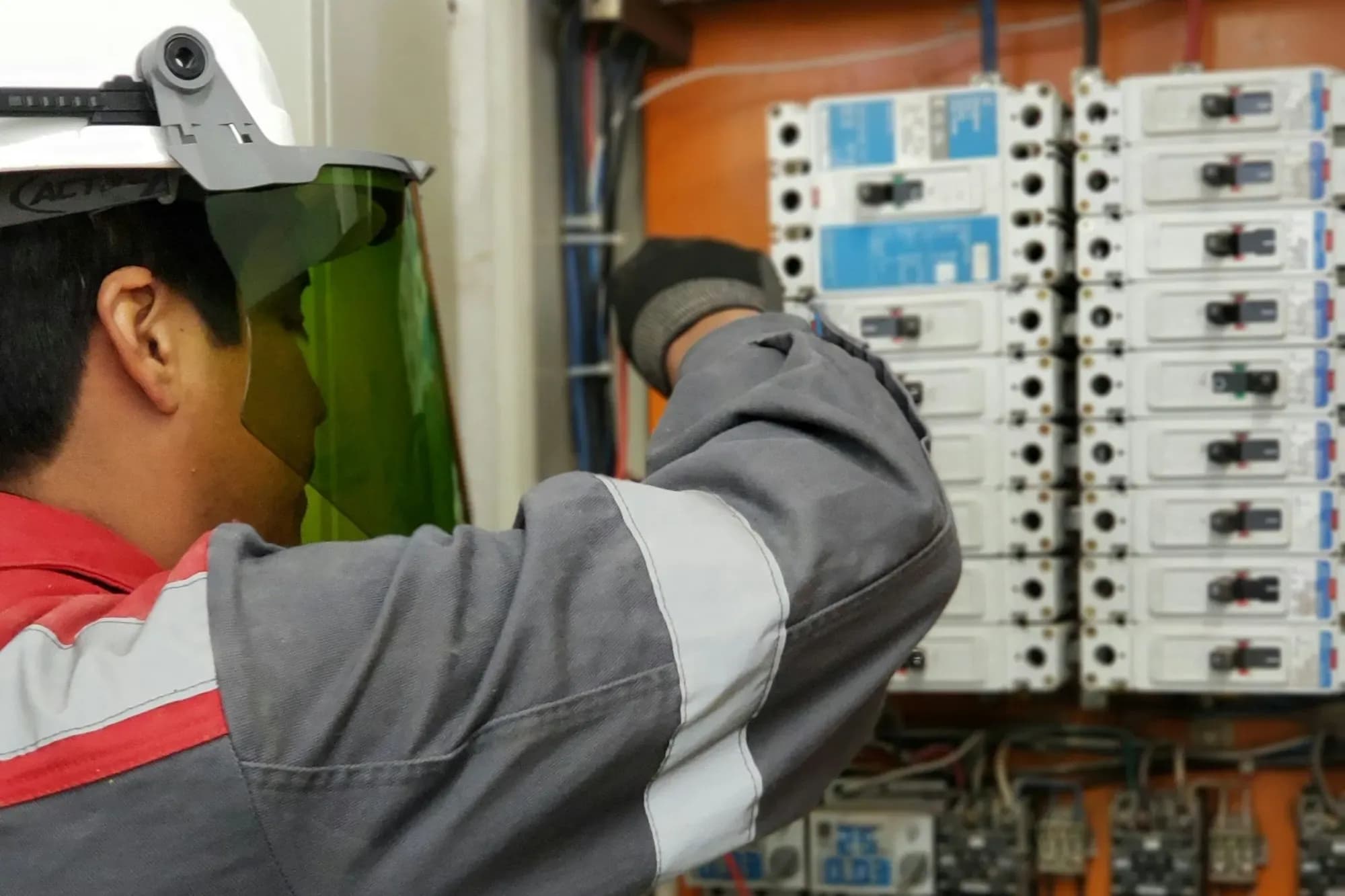
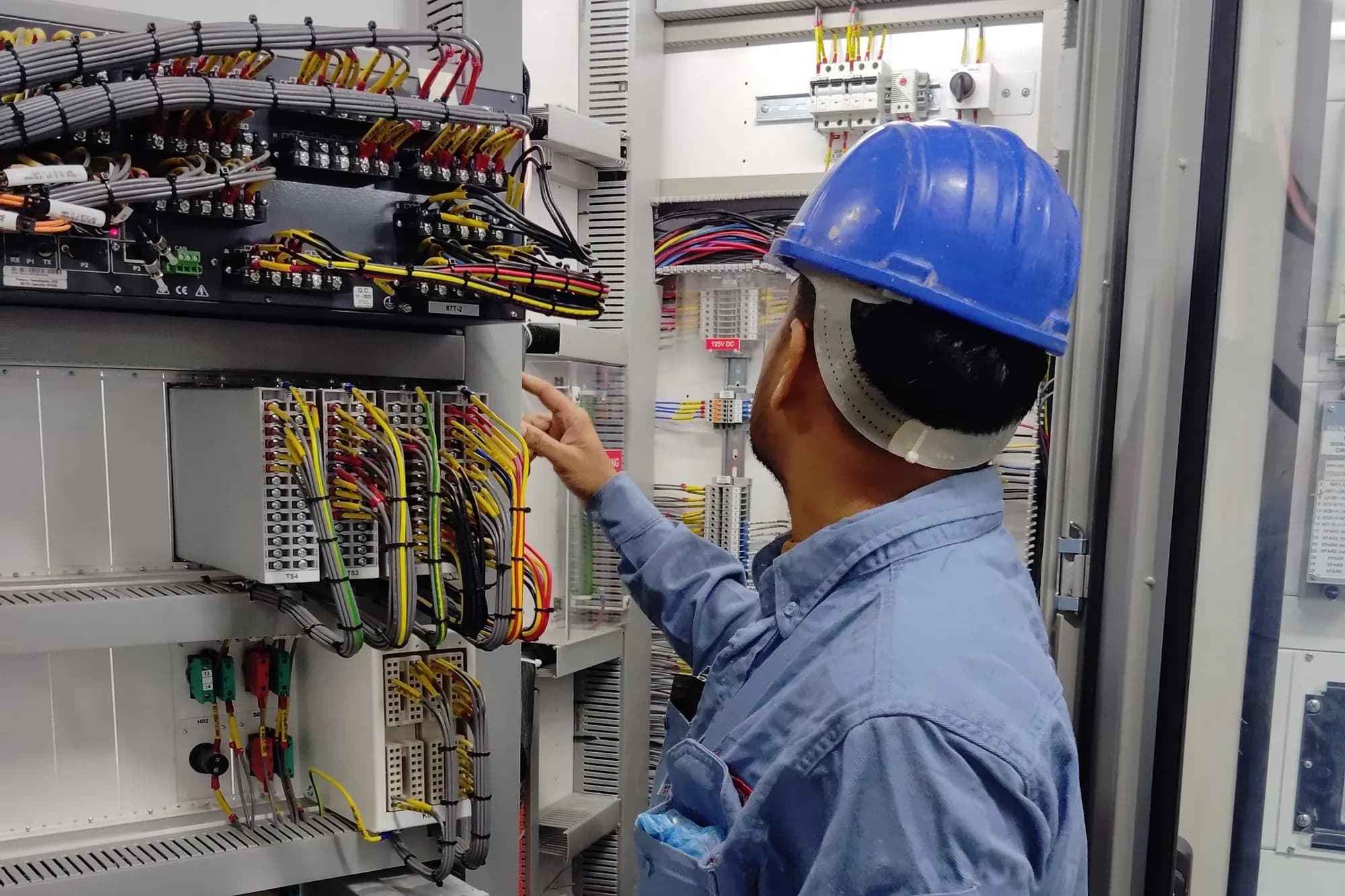
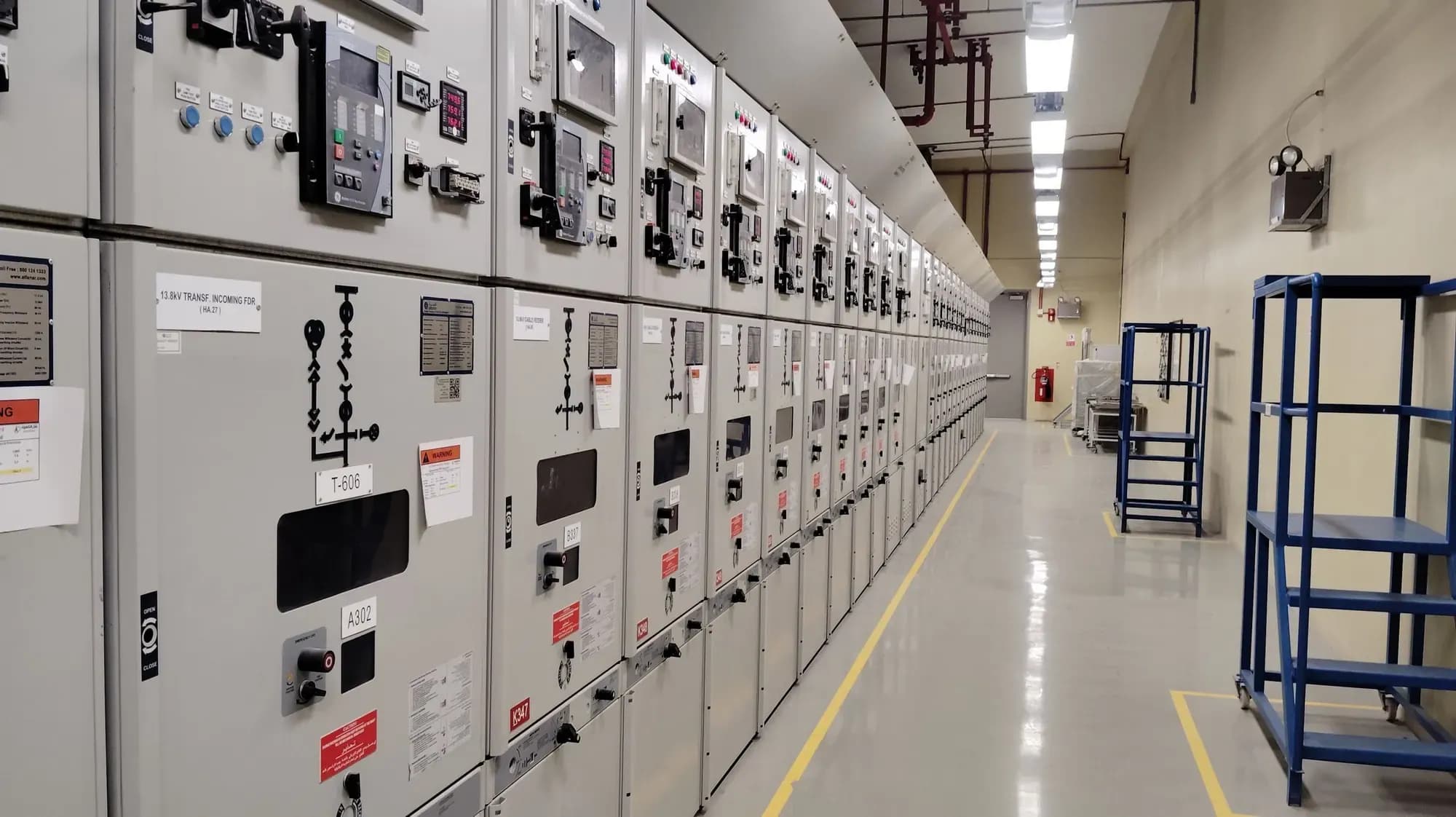
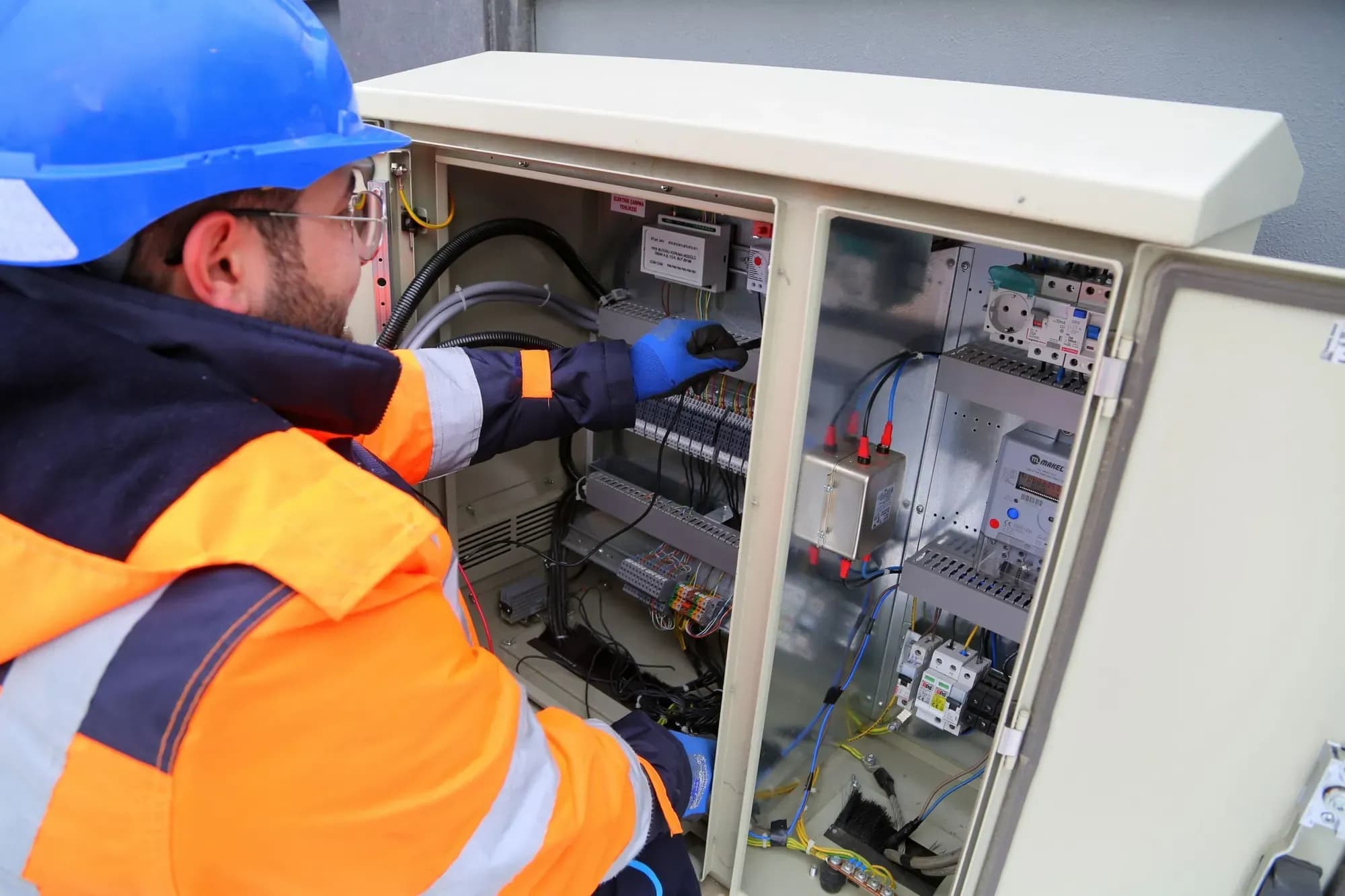
Maintenance engineer in a blue hard hat and orange hi-vis checking breakers inside an outdoor electrical cabinet

The project

You join Millhaven Polymers Ltd (simulated company)

Millhaven Polymers Ltd (simulated company) is a injection moulder, maintenance team in Leicester. You help its team deliver a project for Millhaven production department, at Moulding hall, machines IM-01 to IM-08.

You are a trainee maintenance technician, a career changer or an apprentice, joining a team that makes plastic parts. A patient senior technician is your buddy. In four weeks you learn the order of safe isolation and do it beside an authorised person, read a drawing, swap a sensor, check a heater band, write job cards, and learn to stop and ask. Later you do your first PPMs on the moulding machines, meet stored hydraulic energy, a request to bypass a gate, and someone else's lock on a machine. You end with a first PPM route pack. The skill is to be safe first, honest about what you do not yet know, and useful.

What you will do

  • Put the safe isolation steps in order and practise a lock-out in EDWartens Lab
  • Read a motor starter drawing, choose the right sensor and check a heater band
  • Write a job card and run a 5S audit the way a maintenance team expects
  • Handle stored energy, a bypass request and another person's lock safely
  • Plan a PPM route and hand over a clear first-month pack

The people you deal with

  • Maintenance Managercompany
  • Senior Maintenance Techniciancompany
  • Maintenance Plannercompany
  • Health and Safety Advisorcompany
  • Stores Controllercompany
  • Moulding Shift Leaderclient
  • Production Managerclient
  • Sensor Supplier Supportvendor

The company, client and site are fictional. The people are fictional too.

Look inside

What the simulator looks like

The workplace, your tickets, the documents and the team chat, as a learner sees them.

  • The workplace of the simulated company in the Maintenance Technician job simulation
    Start in the workplace, with the team around you.
  • The Today screen of the Maintenance Technician job simulation: the morning email and the day's tickets
    Today: the morning email and your tickets for the day.
  • The Work screen of the Maintenance Technician job simulation, listing tickets by day
    Work: every ticket, by day, with its status.
  • A ticket in the Maintenance Technician job simulation with its brief and acceptance points
    A ticket, written the way a colleague would write it.
  • A project document in the Maintenance Technician job simulation with number, revision and status
    A project document with its number, revision and status.
  • The Team screen of the Maintenance Technician job simulation with a chat open with an AI colleague
    Ask a colleague. They are AI colleagues: they help you think, they do not hand out answers.

Screenshots from the simulator. Company, people and data are fictional and always labelled as simulated.

Meet the team

The colleagues you work with

You can read their messages and ask them questions. They are AI colleagues with names, roles and faces, always labelled as simulated. They help you think a ticket through; they do not hand out its answer.

  • Portrait of Helen Garvey, an AI colleague (simulated)Helen GarveyMaintenance ManagerSimulated colleague, company side
  • Portrait of Dilip Mistry, an AI colleague (simulated)Dilip MistrySenior Maintenance TechnicianSimulated colleague, company side
  • Portrait of Agnieszka Kaczmarek, an AI colleague (simulated)Agnieszka KaczmarekMaintenance PlannerSimulated colleague, company side
  • Portrait of Femi Jegede, an AI colleague (simulated)Femi JegedeHealth and Safety AdvisorSimulated colleague, company side
  • Portrait of Barry Mallett, an AI colleague (simulated)Barry MallettStores ControllerSimulated colleague, company side
  • Portrait of Robyn Lloyd, an AI colleague (simulated)Robyn LloydMoulding Shift LeaderSimulated colleague, client side
  • Portrait of Yvonne Grealish, an AI colleague (simulated)Yvonne GrealishProduction ManagerSimulated colleague, client side
  • Portrait of Anand Kulkarni, an AI colleague (simulated)Anand KulkarniSensor Supplier SupportSimulated colleague, vendor

Fictional people, with simulated faces.

What you get

What you walk away with

Spend a month in a moulding plant maintenance team: safe isolation beside a buddy, first PPMs and a first route pack.

Roles to look for

  • Maintenance Technician
  • Trainee Maintenance Technician
  • Maintenance Apprentice
  • Multi-skilled Maintenance Operative
  • Engineering Technician (maintenance)

4479 live openings on the UK jobs board, checked 15 Nov 2026. See the jobs

Your proof

  • Your work pack, as a PDF and a zip, with your documents, timesheet and skills before and after.
  • A certificate anyone can verify. Optional, and included in Premium.
  • An entry on your EDWartens profile under Work experience, marked as a job simulation.
  • A work record with your skill scores, with Premium.

What you can talk about at interview

  • You can explain the order of a safe isolation and say why a trainee does it beside an authorised person.
  • You can describe what is still dangerous on a machine after it is switched off.
  • In Premium, you can talk through a request to bypass a guard and what you said, and the first PPM route pack you built.

Day by day

Your 5 free days, and the project they build

Each working day takes 30 to 45 minutes: clock in, a morning meeting, your tickets, an end-of-day report, clock out. Do a day at a time or several in one sitting. On day 1 your manager checks what you know and plans your learning. Every ticket is checked, and you see the model answer after it.

Moulding hall first PPM route

For Millhaven production department (fictional)

Millhaven's moulding hall runs machines IM-01 to IM-08 to a daily plan, and production is first to ring when one stops. As a trainee you learn to work safely beside a senior technician, then take on real jobs. This project ends with your first planned preventive maintenance route pack, written clearly enough for the next shift to follow.

In scope for you

  • Put the safe isolation steps in order and practise a lock-out
  • Read a starter drawing, choose a sensor and check a heater band
  • Write job cards and run a 5S audit
  • Handle stored hydraulic energy, a bypass request and someone else's lock
  • Build and hand over the first PPM route pack

You hand over

  • Safe isolation steps in orderSafe isolation sequence
  • A job card with cause, parts and downtimeJob card (CMMS work order close-out)
  • Weekly hydraulic round with statusPPM check sheetPremium
  • Change impact note for a heater bandChange impact notePremium
  • Toolbox talkToolbox talk recordPremium
  • My first PPM route packPPM route packPremium
Milestones in the free days

  1. By day 3Isolation steps in order, drawing read, sensor chosen, heater band checkedMoulding hall first PPM route
  2. By day 5First job card written, 5S audit done, senior's absence handledMoulding hall first PPM route

Tickets, day by day

  1. Day 1

    2 tickets
    • Induction: site safety and isolation rulesQuiz
    • Put the safe isolation steps in the right orderTable
  2. Day 2

    2 tickets
    • Check a written description of a motor starter drawingDocument review
    • Lab: lock out a starter, prove it dead and bring it backHand-in
  3. Day 3

    2 tickets
    • Which proximity sensor do we order for IM-06?Decision
    • A heater band reading: is it healthy?Calculation
  4. Day 4

    1 ticket
    • Write the job card for the IM-06 sensor repairWriting
  5. Day 5

    2 tickets
    • 5S audit: which S, and how fast?Table
    • The senior is called away: what do you do?Decision

On day 5 you clock out and your manager does a final review with you, and your work pack is ready: the free days, in about 3 to 4 hours.

Premium: days 6 to 20about 12 to 15 hours with the free days

After day 5 the project goes on with a change request, site work, faults, a handover and a capstone reviewed by an engineer. Your manager also checks in on days 5, 10 and 15, and the final review comes after day 20.

  1. By day 10Hydraulic round done, weeping hose handled, heater band change and spares writtenMoulding hall first PPM route
  2. By day 15Starter fault repaired, gate bypass refused, PPM sheet checked, toolbox talk givenMoulding hall first PPM route
  3. By day 20PPM round timed, route pack and handover note deliveredMoulding hall first PPM route

See the Premium plan

  1. Day 6

    2 tickets
    • How a moulding machine works and where it can hurt youQuiz
    • The weekly hydraulic round: status and main reasonTable
  2. Day 7

    1 ticket
    • A weeping hose fitting: nip it up?Decision
  3. Day 8

    1 ticket
    • Can the zone take a bigger heater band?Calculation
  4. Day 9

    1 ticket
    • Change impact note for the IM-05 heater bandWriting
  5. Day 10

    1 ticket
    • Spares: order point, order now and quantityTable
  6. Day 11

    1 ticket
    • Lab: find the starter fault and repair it under lock-outHand-in
  7. Day 12

    1 ticket
    • The shift leader asks for a link across the gate switchDecision
  8. Day 13

    1 ticket
    • Check a finished PPM job sheetDocument review
  9. Day 14

    1 ticket
    • Write the job card for the IM-07 heater zone faultWriting
  10. Day 15

    1 ticket
    • A five-minute toolbox talk: what stays dangerous after switch-offWriting
  11. Day 16

    1 ticket
    • How long does the PPM round take each week?Calculation
  12. Day 17

    1 ticket
    • Someone else's lock is on IM-01Decision
  13. Day 18

    1 ticket
    • Capstone: my first PPM route packHand-in
  14. Day 19

    1 ticket
    • Your handover noteWriting
  15. Day 20

    1 ticket
    • A conversation about your monthViva

Your workplace

Where you work, and with what

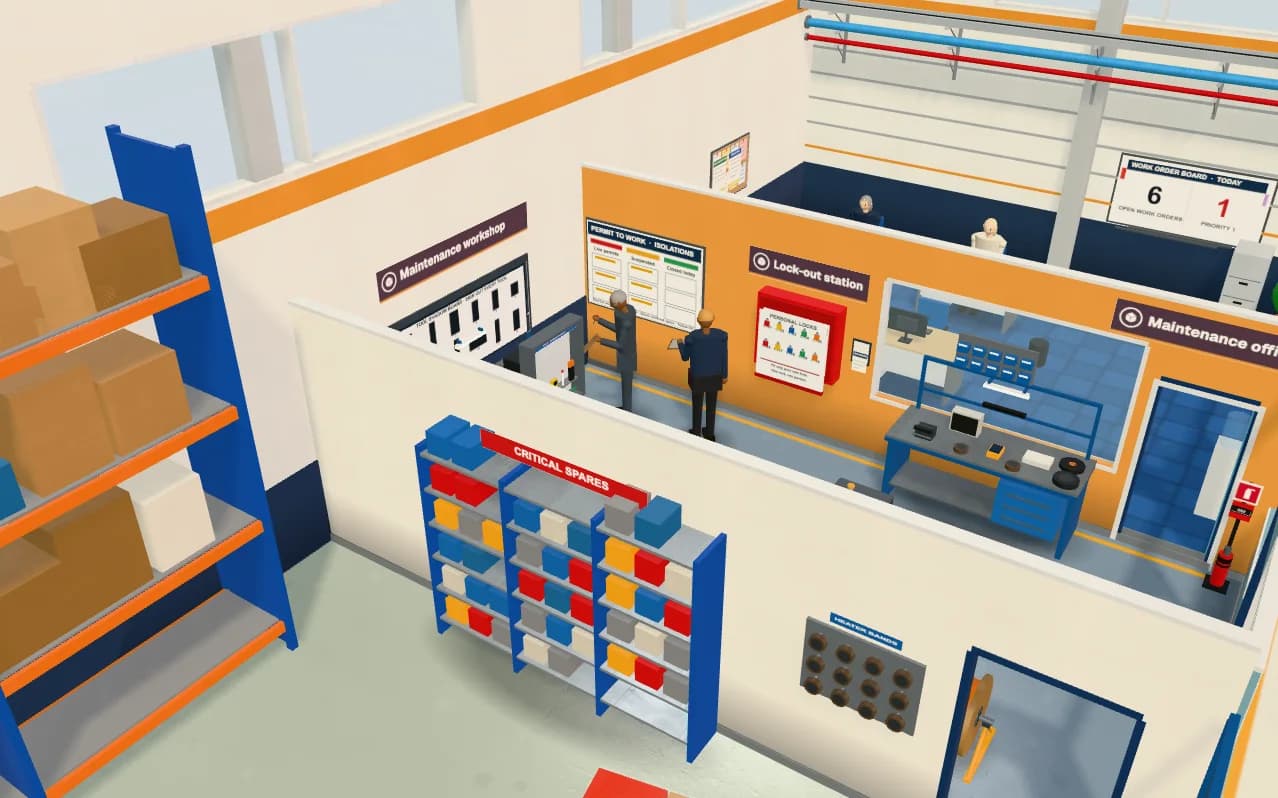
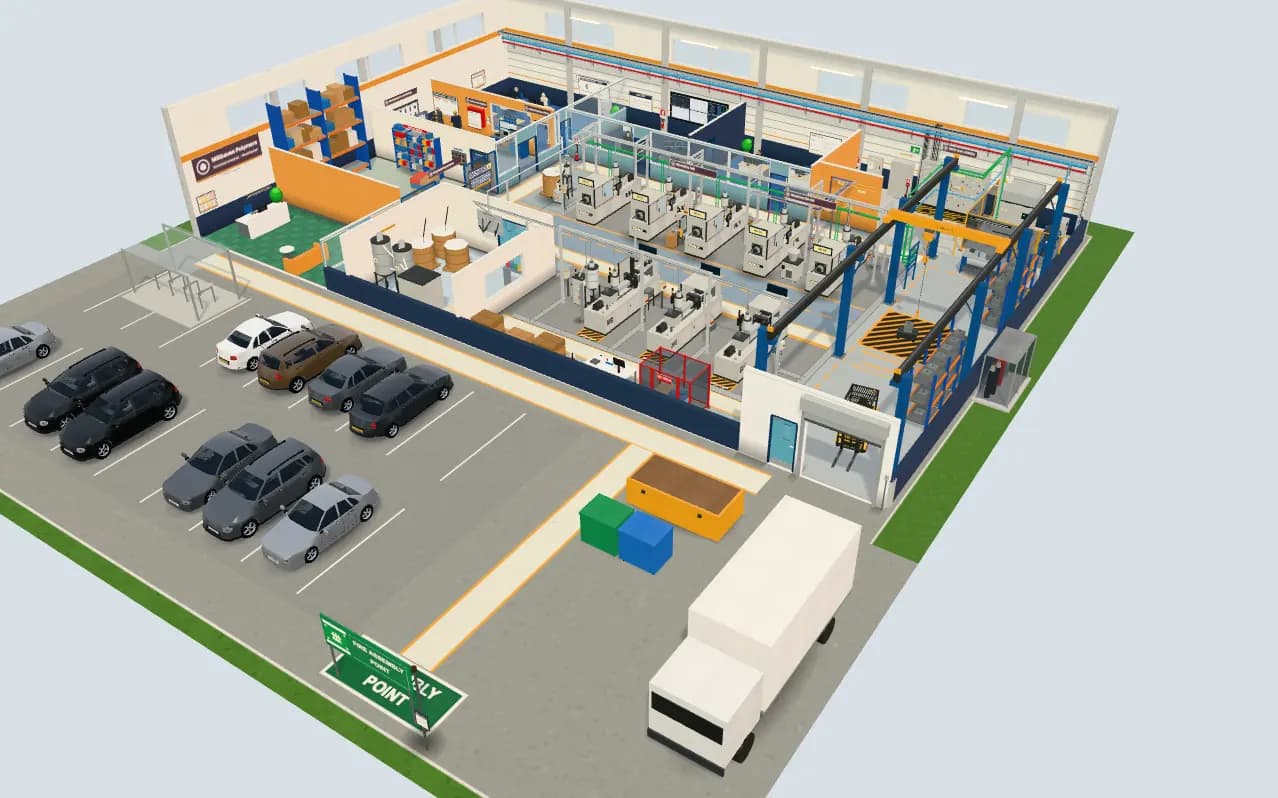
You work in a plant floor with a workshop and offices: Millhaven Polymers (simulated company), Moulding hall. It is a 3D room with your colleagues in it.

Hours and rhythm

Days, 07:00 to 15:30, Monday to Friday (simulated)

  • 07:00 toolbox talk in the workshop
  • 07:15 work orders handed out from the board
  • 15:00 write up your job cards
  • 15:15 handover to the late shift technician

You clock in and out of every day. The simulated clock runs faster between events, so a day takes 30 to 45 minutes of real time.

Machines and equipment

Real lab machines stand in the workplace, and the hands-on tickets point to the matching EDWartens Lab exercise. In the UK edition you do the lab exercise yourself, tick a checklist and hand in your notes and figures. It is a self-review hand-in. The lab does not mark you or send us a result.

The lab exercises for this role are listed under Prepare, further down.

Systems and kit

Maintenance system (simulated). Every job is a work order: you open it, record what you found, the time and the parts, and close it. Agnieszka reads every job card.

PPE on site: Safety boots, Hi-vis vest, Safety glasses, Ear defenders in the moulding hall, Heat-resistant gloves near the barrel and nozzle, No loose clothing, long loose hair tied back, no jewellery near moving parts.

The 3D workplace of the simulated company in the Maintenance Technician job simulation
The simulated workplace you walk around. The company and the people are fictional.

Skills checked

The skills your manager checks

On day 1 you rate yourself on about eight skills for the role, from never done it to could teach it. Your manager then asks two short "show me" questions on the skills you rated highest. The same skills are rated again at the final review, so you see a before and after.

  • Safety and safe systems of work
  • Written communication
  • Safe isolation and LOTO
  • Planned and corrective maintenance
  • Wiring and terminations
  • Fault finding
  • CMMS and work order records
  • Planning and prioritising

A "How to do this" panel opens on tickets that use a skill you rated low. Where you have shown you know a skill, the help stays folded away, and you can open it any time.

Real documents

The documents you will work with

Each one has a title block with a number, a revision, a status and who prepared, checked and approved it, the way a project document does. You read them, check them and write your own, and what you hand in becomes a controlled document too. Everything is kept in your work pack.

  • MHP-HSE-001

    Site safety rules and safe isolation procedure

    Rev 2Safety procedure

  • MHP-MAC-001

    Injection moulding machines IM-01 to IM-08: what is on them and where they can hurt you

    Rev AMachine guide

  • MHP-DSB-004

    Design basis: hydraulic pump motor starter, IM-04

    Rev BDesign basis

  • MHP-SCH-004

    Motor control schematic extract: hydraulic pump motor starter, IM-04 (written description)

    Rev CSchematic extract

  • MHP-DAT-021

    Proximity sensors: the IM-06 mould-closed sensor and the stores candidates

    Rev ADatasheet extract

  • MHP-WO-004417

    Work order: IM-06 mould-closed signal missing

    Rev 1Work order

  • MHP-DAT-022

    Barrel heater bands and zone data, IM-05

    Rev AEquipment data

  • MHP-LOG-005

    Your notes from the IM-06 sensor job, day 4

    Rev 1Shift log

  • MHP-AUD-003

    5S audit sheet: maintenance workshop and tool store, week 5

    Rev 1Audit sheet

  • MHP-SOP-006

    Stop, make safe and ask: when to escalate

    Rev 1Procedure

  • MHP-LAY-001

    Moulding hall layout: machines, isolators and energy points

    Rev APlant layout

  • MHP-REG-001

    Personal lock register, moulding hall: blank page and how to fill it in

    Rev 1Lock register

Documents that arrive in Premiumchange requests, records, handover
  • MHP-PPM-HYD-004

    Hydraulic power pack checks: status rules and this week's readings

    Rev APPM sheetPremium

  • MHP-PPM-001

    Planned preventive maintenance schedule, moulding hall IM-01 to IM-08

    Rev APPM planPremium

  • MHP-PPM-001

    Planned preventive maintenance schedule, moulding hall IM-01 to IM-08, revised

    Rev BPPM planPremium

  • MHP-ECR-001

    Change request: a 3.0 kW heater band in place of the 2.0 kW HB-3 on IM-05

    Rev AChange requestPremium

  • MHP-DAT-022

    Barrel heater bands and zone data, IM-05, revised

    Rev BEquipment dataPremium

  • MHP-SPR-001

    Critical spares: stock list and order rule

    Rev ASpare parts listPremium

  • MHP-TST-011

    Guard interlock: how to test it and what to do when it fails

    Rev 1Test methodPremium

  • MHP-PPM-JOB-0412

    Completed PPM job sheet, IM-03, four-weekly (an earlier trainee's draft)

    Rev 1PPM job sheetPremium

  • MHP-FLT-018

    Fault evidence: IM-07 zone 2 will not heat

    Rev AFault evidencePremium

  • MHP-SOP-007

    Removing a lock that belongs to someone else

    Rev 1ProcedurePremium

  • MHP-TBT-001

    Toolbox talk format and facts for the moulding hall

    Rev 1GuidancePremium

  • MHP-HOV-001

    First PPM route pack: what goes in it

    Rev AHandover indexPremium

Tools

In the industry, and here

Tools in the industry and what you use here
In the industryHere
Voltage indicator and proving unit (GS38), clamp meter, ohmmeterEDWartens Lab's panel exercises, with readings you take, and test records you read and write up
Work orders and job cards in a maintenance systemWork orders, close-out notes and job cards as documents and tickets
Isolation certificates, lock and tag, stop-and-ask rulesProcedures to put in order, certificates to check and decisions to make
PPM sheets, spares lists and a 5S auditTables and calculations you complete and have checked

Standards

The standards the work follows

  • HSG85 (electricity at work, safe working)
  • GS38 (electrical test equipment)
  • Electricity at Work Regulations 1989
  • PUWER 1998
  • HSG253 (safe isolation of plant and equipment)
  • BS 7671 (awareness)

In the UK

The Maintenance Technician role in a UK setting

Who employs this kind of engineer: Plastics and injection moulding sites, light manufacturing, packaging and assembly plants.

Where: Industrial regions such as the North West, Yorkshire, the Midlands, Scotland and the South West have many manufacturing sites with in-house maintenance teams that take on technicians. This is context, not a statement about vacancies.

UK standards and regulations to know about

  • Electricity at Work Regulations 1989

    The law on safe work with electrical systems. HSE guidance HSG85 explains safe working practices.

  • PUWER 1998

    The Provision and Use of Work Equipment Regulations: equipment must be suitable, maintained and safe to use. HSE guidance L22 explains them.

  • HSE guidance HSG85 and GS 38

    Safe working practices for electricity, and guidance on electrical test equipment.

  • HSG253

    HSE guidance on the safe isolation of plant and equipment, including stored energy.

  • BS 7671

    The IET Wiring Regulations. Awareness only at this level.

Schemes to be aware of

  • ECS card (Electrotechnical Certification Scheme)

    The industry card that many UK electrotechnical employers and sites ask to see. It is linked to qualifications and a health and safety assessment. EDWartens does not issue it, and this simulation does not lead to it.

These are named so that you recognise them. A job simulation does not teach them as a qualification, the tasks use simplified data, and you should always read the current edition of anything you rely on.

Your proof, optional

A certificate you can verify

The free days are free. The graded, verifiable certificate is an optional extra, and it is included in Premium.

  • A graded, verifiable certificate with your score and band
  • A public verification page and QR code
  • The details to list it on LinkedIn under Licences & certifications, ready to copy
  • Issued by WARTENS LTD. It is a training certificate, not an accredited qualification, and the company is simulated

Optional: £14.99 including VAT, once you pass.

Sample

Job Simulation Certificate

Your name

completed the Maintenance Technician job simulation at Millhaven Polymers Ltd (simulated company). Your score and band are shown on the real certificate.

Number
EDW-JS-0000
Issued by
WARTENS LTD

Not an accredited qualification. A verification page and QR code are printed on the real certificate.

Premium

Want the full project, reviewed by an engineer?

Premium runs to day 20, about 12 to 15 hours in all, and includes the graded certificate. Your free days carry over, and nothing you did is lost.

£53.99 including VAT, one payment. If you have bought the certificate, you pay £39.00.

  • Working days 6 to 20 (about 12 to 15 hours in all): change requests, site work, faults and handover
  • A capstone deliverable reviewed by an engineer
  • An AI viva on your own work
  • The graded certificate and a work record PDF with your skill scores

Prepare

Free courses and labs that get you ready

Linked from the tickets that need them. You can read them before you start.

Free courses

EDWartens Lab guides

The hands-on tickets point to these lab exercises. You do the exercise, tick the checklist and hand in your notes and figures. In the UK edition that is a self-review, and nothing is marked as passed on the lab's say-so.

About the Maintenance Technician role

Safe isolation: the order, and who does it

Safe isolation is a fixed sequence: identify every energy source, switch off and open the isolators, lock and tag, prove the voltage indicator, test dead, prove the indicator again, then release stored energy. The order is the safety. UK guidance for this is HSE's HSG85 for electrical work and GS38 for test equipment.

A trainee does not isolate alone. In the simulation an authorised senior leads and you add your own lock and tag, so you learn the steps by watching and doing them together. A practice level in the panel lab lets you run the whole sequence yourself, so the order sticks.

Heat, oil pressure and the other energy on a machine

Switching off the electricity does not make a moulding machine safe. The barrel stays hot for hours, a hydraulic accumulator holds oil pressure, and a platen or arm can move under its own weight. Each one is dealt with separately, and oil under pressure can pierce skin, so nobody feels for a leak with a hand.

The simulation puts you in front of a weeping hose fitting where the shift leader says it is only a drip. The right answer is not to touch it until it is isolated and the pressure reads zero. You also check a heater band, and see why resistance is measured only when the machine is isolated and the band is cold.

Reading drawings, sensors and job cards

Entry-level maintenance still means reading. You check a written description of a motor starter against its design basis and find the stop button wired the wrong way and an overload set too high. You choose between PNP and NPN proximity sensors for an input card, and see that a normally closed type would invert the signal.

You then write the job card the planner needs, with the fault, cause, parts, labour, downtime and tests. A clear job card is a safety record as well as a cost record, and it is how the next shift knows what happened.

First PPMs, change control and the capstone pack

Planned preventive maintenance is the checking done on a schedule so machines do not fail. You read a hydraulic round, check a finished PPM job sheet for mistakes, work out how long a weekly route takes and write a toolbox talk for the setters.

Two cases test your nerve. Production asks for a bigger heater band than the zone can carry, which needs a change note. Then production asks for a link across a gate switch, which you refuse and report. The capstone is a first PPM route pack that a new starter could use. Stopping and asking is treated as part of the job.

Questions

Quick answers

Can I start a maintenance career with no experience?

Many employers take apprentices and career changers, and routes vary by employer and region. The simulation shows the habits they look for: safe isolation, clear records and a willingness to ask.

What is safe isolation?

It is a documented sequence to prove equipment is dead and secured before work: identify, isolate, lock and tag, prove the tester, test dead and prove the tester again. Follow your site rules and HSE guidance such as HSG85.

What does GS38 cover?

It is HSE guidance on electrical test equipment used on low voltage systems. It covers probes with short exposed tips, finger guards and fused leads, and why a voltage indicator is proved before and after use.

What is PPM?

PPM means planned preventive maintenance: checks and servicing done on a schedule to stop breakdowns. A route lists the tasks, the machines, the time and whether isolation is needed.

What is the difference between PNP and NPN sensors?

A PNP sensor switches the positive supply to the input and an NPN sensor switches the zero volt side. The input card decides which one works, so the wrong type may fit but never switch.

Does this make me authorised to isolate machines?

No. Authorisation comes from your employer after training and assessment. The simulation teaches the order and the reasons, and a real trainee works beside an authorised person.

Why do technicians refuse to bypass a safety gate?

A gate interlock stops the clamp when the gate opens. A link or tape defeats it and can lead to a crush injury. PUWER 1998 requires guards and interlocks to work, so the machine stays stopped until it is repaired.

Is a virtual exercise a substitute for hands-on training?

No. It builds the order of steps and the habit of stopping and asking. Hands-on skill comes from supervised practice at work or college, which a simulation complements and does not replace.

Do I need any experience to start?

No. The role is written for career changers and apprentices. It explains the words as it goes and starts with the safety rules and the order of safe isolation.

Will this teach me to isolate machines on my own?

No. It teaches the order and the reasons. On a real site you isolate only when your employer has authorised you, and until then you work beside an authorised person.

Is the plant a real one?

No. Millhaven Polymers is a made-up company and the site is simulated. The documents, readings and situations follow what a trainee meets in a real moulding plant.

How long does it take?

The free week is about nine hours over five days. The full Premium edition runs over twenty working days and about thirty to forty hours, at your own pace.

What do I get at the end?

A work record with scores by task and skill, which shows on your EDWartens profile under Work experience, marked as a job simulation.

Is the Maintenance Technician job simulation free?

Yes, to start. Days 1 to 5 are free. The certificate (£14.99) and the Premium edition (£53.99) are optional, and both prices include VAT.

Does it count as work experience?

No. It is a training project at a simulated company, not employment, an internship or a placement. A job simulation is a realistic training project at a simulated company. It is not employment, an internship or a work placement, and it is not a job offer. Hours are active hours the learner logged on EDWartens UK.

A job simulation is a realistic training project at a simulated company. It is not employment, an internship or a work placement, and it is not a job offer. Hours are active hours the learner logged on EDWartens UK.

Start the Maintenance Technician job simulation today

Days 1 to 5 are free, about 3 to 4 hours. No card to start. Practice, not employment.

A corner of the simulated workplace in the Maintenance Technician job simulation