
FANUCFree
Free courses
Free industrial robot programming courses with certificate
FANUC, ABB RobotStudio and KUKA, free and complete: teach pendants, frames, motion, I/O, PLC integration, safety and offline programming, with notes, quizzes and an optional verifiable certificate.
Why learn it
Why Robotics
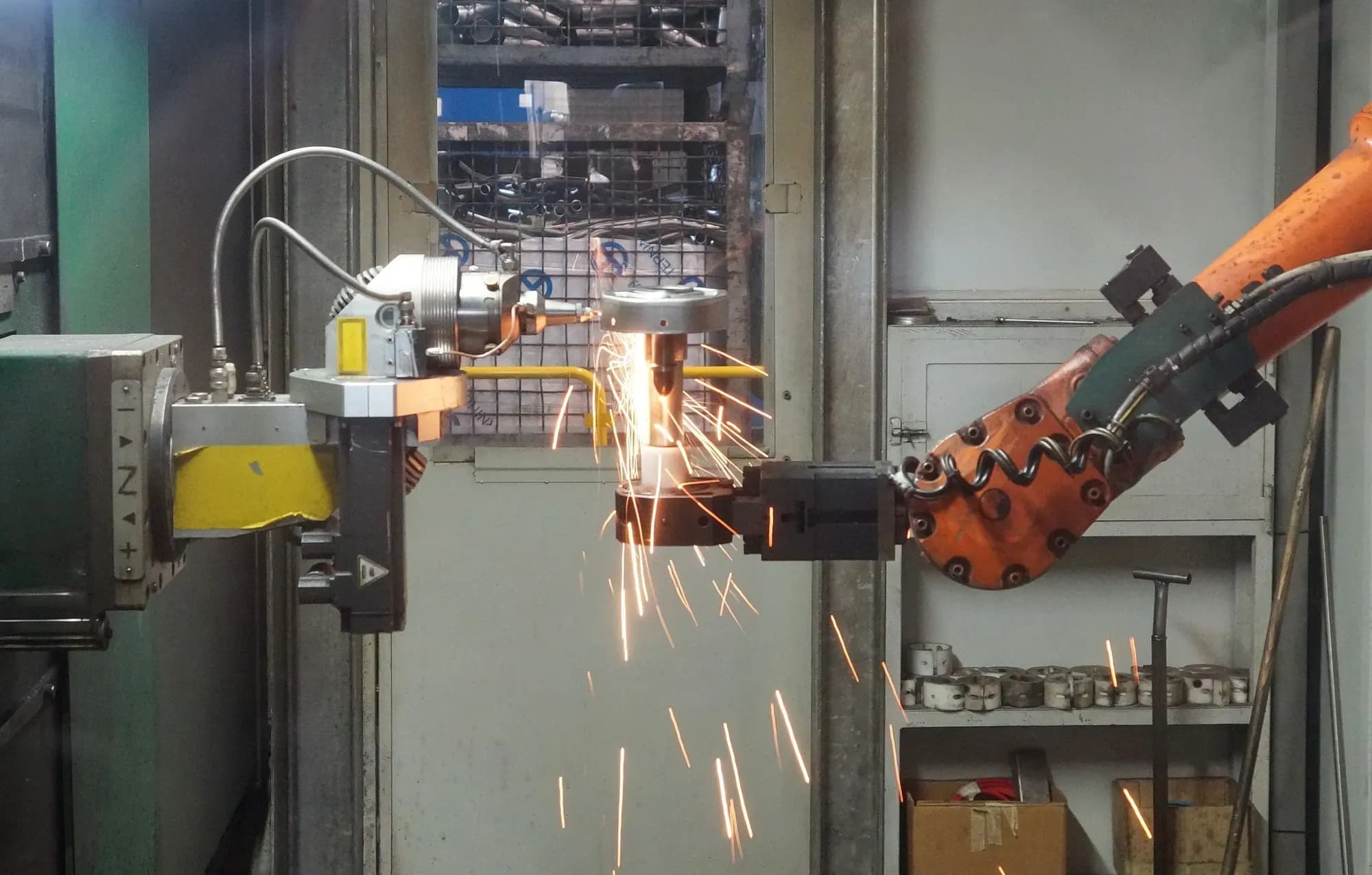
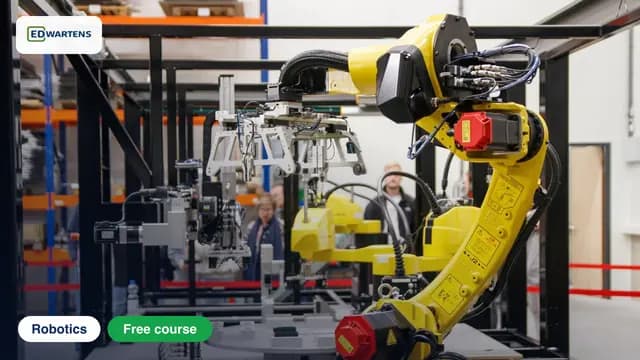
Industrial robots work in UK automotive, food, logistics and general manufacturing. Simulation software such as RobotStudio and ROBOGUIDE makes robot programming learnable without a cell, before you meet a real one.
8 free Robotics courses
Showing 8 of 8 courses
- KUKAFree
- Vendor-neutralFree
- Universal RobotsFree
- ABBFree
- YaskawaFree
- RoboDKFree
- Vendor-neutralFree
Practise as you learn
Watching is a start. Do it in the Lab, free.
The EDWartens Lab runs in your browser, with nothing to install. It is a practice environment, not the vendors' own software.
- Jog the arm with a pendant
- Teach points and run a pick and place cycle
- Prove that the safety gate stops the robot
Before you start
What you can and cannot get
- All 8 courses are free to learn: video lessons, notes, a quiz after each module and a final exam.
- About 137 hours of study in total, self-paced, with no card needed.
- An optional certificate of completion, £19 including VAT per course, with a number anyone can check at edwartens.co.uk/verify.
Not included
- A regulated qualification, an accredited or CPD-accredited award, or a job. We never promise one.
- Real hardware or paid software: practice runs in simulators, free tools and the EDWartens Lab in your browser.
Read how the optional certificate works on the certificate page.
Questions
Robotics: common questions
Last reviewed 28 October 2026.
Can I learn robot programming without a robot?
Yes. Every course uses the vendor's simulator; the concepts transfer directly to the real pendant.
Which robot course first?
ABB RobotStudio if you want the most complete free simulation; FANUC if the plants you are aiming at run FANUC.
Is robot learning with AI covered?
Yes. Physical AI with LeRobot teaches a robot arm from demonstrations with imitation learning, in simulation or on a low-cost SO-101 arm.