
Training
How Our Training Works
Intensive, hands-on automation training delivered at our Milton Keynes facility and online. Learn to program Siemens PLCs, design SCADA systems, and build AI-powered automation solutions using industry-standard tools.
The Opportunity
Why Automation Is the Most Future-Proof Career
In an era where AI is disrupting many industries, automation engineering stands apart. PLCs control physical machinery — no chatbot or language model can replace a human engineer commissioning a production line, wiring a control panel, or troubleshooting a live factory. Here's why this career is uniquely secure.
AI Cannot Replace PLC Engineers
Programmable Logic Controllers are physical hardware systems controlling real-world machinery — conveyors, robots, valves, motors. AI cannot physically wire a control panel, commission a PLC on a factory floor, or troubleshoot a live production line. These are hands-on, safety-critical skills that require human engineers on site.
Every Factory Runs on PLCs
From food processing to automotive, pharmaceutical to energy — every manufacturing facility in the UK relies on PLCs and SCADA systems. There are over 180,000 manufacturing firms in the UK, and virtually all of them need engineers who can program, maintain, and troubleshoot these systems.
Demand Is Growing, Not Shrinking
The UK faces a critical shortage of automation engineers. Industry reports estimate 2.1 million engineering roles need filling by 2030. As factories become smarter with Industry 4.0, the need for PLC and SCADA engineers is accelerating, not declining. AI adds new roles on top of existing ones.
AI Enhances Automation — It Doesn't Replace It
AI and Machine Learning are powerful tools that sit on top of traditional automation. Predictive maintenance uses AI to analyse PLC data. Computer vision enhances quality control. But underneath every AI system in a factory, there is still a PLC running the physical process. The engineer who understands both has a massive advantage.
Physical Infrastructure Cannot Be Automated Away
Unlike software jobs that can be outsourced or automated, PLC engineering requires physical presence on site — commissioning equipment, testing I/O wiring, calibrating sensors, and ensuring safety systems work. This is inherently local, hands-on work that will always require skilled humans.
Recession-Proof, Future-Proof Career
Factories don't stop running during recessions — they still need maintenance and automation support. The transition to net zero, smart manufacturing, and Industry 4.0 means more automation investment, not less. Engineers who combine PLC skills with AI capabilities are the most valuable professionals in the sector.
2.1M
Engineering roles to fill by 2030
Source: Engineering UK
180,000+
Manufacturing firms in the UK
Source: Make UK
£45,000+
Average automation engineer salary
Source: Indeed, Glassdoor
Delivery Modes
Multiple Ways to Learn


Classroom Training
Milton Keynes, MK1 1EX
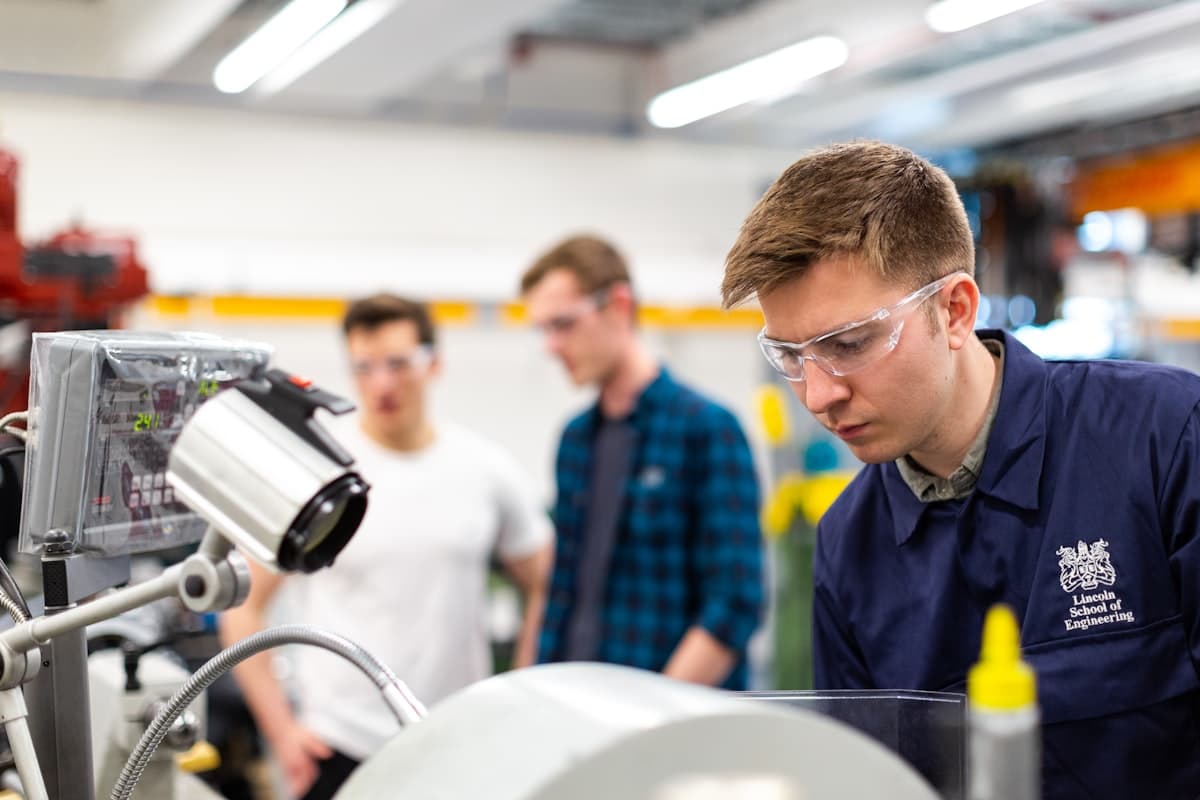
Hands-on training at our facility at 8 Lyon Road, Milton Keynes. Work with Siemens PLC hardware, industrial panels, and FactoryIO simulation under the guidance of experienced engineers.
Online Live Sessions
Anywhere in the UK
Join interactive live sessions with screen sharing, remote lab access via FactoryIO, and real-time Q&A. Ideal for professionals who cannot travel to Milton Keynes for in-person training.
Pre-recorded Foundation
12+ Hours Self-Paced
Both courses include 12+ hours of pre-recorded foundation sessions covering Basic Electrical, Electronics, Pneumatics, Industrial Automation, and PLC fundamentals — study at your own pace before class.
Course Structure
Day-by-Day Syllabus
Both courses run for 5 days (BST 9:00 AM – 5:00 PM) with breaks. Classes include 8 hours of training daily. Choose a module below to see the full breakdown.
Pre-Course
Phase 0
Foundation (Pre-recorded Sessions)
12+ hours of self-paced sessions covering Basic Electrical, Basic Electronics, Introduction to Pneumatics, Industrial Automation, and Introduction to PLC. Complete before your classroom dates.
Day 1
Phase 1
PLC Programming with Siemens TIA Portal
Introduction to Siemens TIA Portal, PLC overview, understanding hardware and architecture, basics of ladder logic programming, hands-on practice creating PLC programs, troubleshooting techniques.
Day 2
Phase 2
Advanced PLC Programming & Applications
Advanced programming concepts in Siemens TIA Portal, developing complex PLC programs, simulation and testing of PLC programs, practical applications and case studies.
Day 3
Phase 3
HMI Development with Siemens TIA Portal
Introduction to HMI and its importance, Siemens HMI hardware and software, creating HMI projects, designing screens and navigation, integrating HMI with PLC programs, best practices.
Day 4
Phase 4
Introduction to SCADA (WinCC)
Overview of WinCC SCADA System, SCADA in Industrial Automation, exploring WinCC interface, tags and tag-based data acquisition, creating graphics and objects, building a SCADA application.
Day 5
Phase 5
Advanced Features & Career Preparation
Dynamic graphics and animation, alarm and event management, trending and historical data analysis, introduction to FactoryIO, project creation, interview preparation, resume writing.
Daily Schedule (BST)
9:00–10:30
Class
10:30–10:45
Break
10:45–1:00
Class
1:00–1:30
Break
1:30–3:30
Class
3:30–3:45
Break
3:45–5:00
Class
Industry Tools
Tools You Will Master
Siemens TIA Portal
Siemens
Industry-standard engineering framework for programming Siemens S7-1200 PLCs, designing WinCC HMIs, and configuring SCADA systems. Used by engineers worldwide.
WinCC SCADA
Siemens
Supervisory Control and Data Acquisition system for monitoring and controlling industrial processes. Build dashboards, trends, alarms, and reporting.
Factory I/O
Real Games
3D factory simulation software that connects to real PLCs. Practice automation logic on virtual conveyor systems, sorting stations, and pick-and-place machines.
Python & ML Libraries
AI Module
Python with TensorFlow, scikit-learn, and OpenCV for AI Module students. Build predictive maintenance models, computer vision systems, and AI-enhanced dashboards.
What to Expect
Your Training Experience
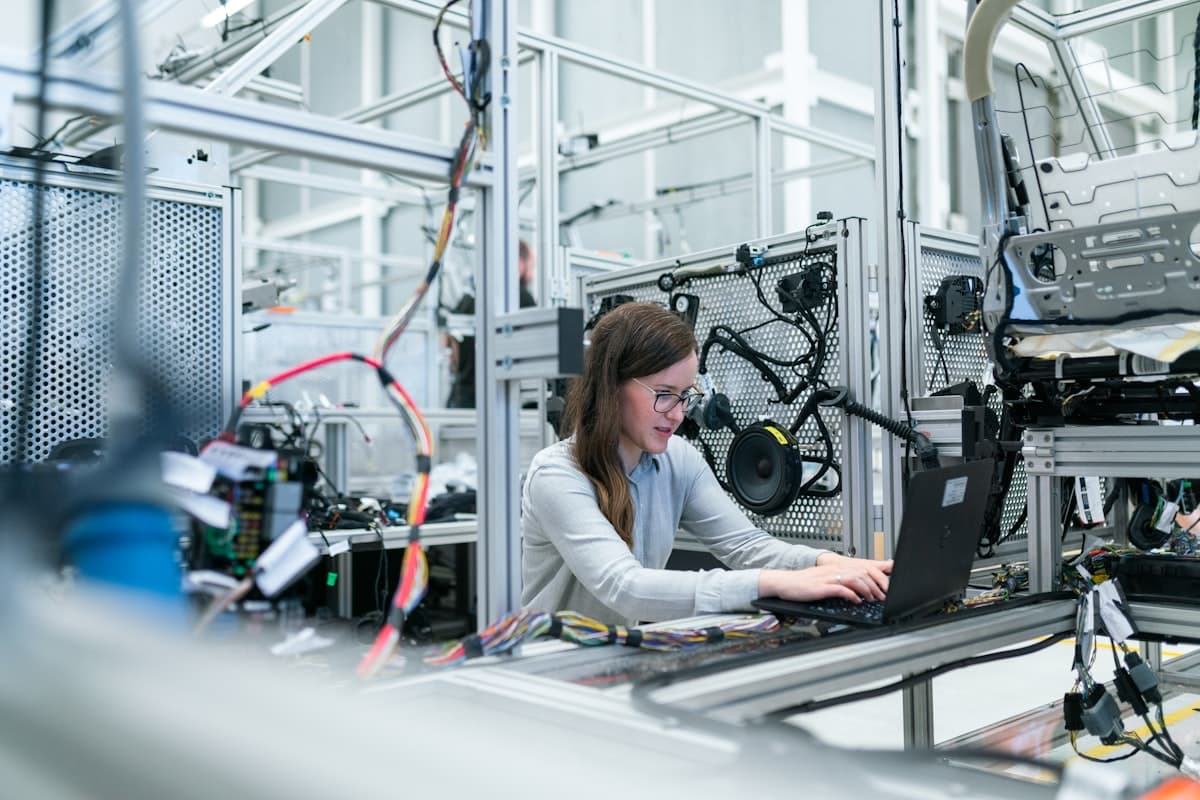
Our Training Facility
Fully equipped with Siemens hardware, industrial panels, and simulation software
Small Batch Sizes
Maximum 15 students per batch for personalised instruction and ample hands-on time with PLC hardware and software.
Real Equipment
Work with Siemens S7-1200 PLCs, industrial panels, sensors, and actuators. Connect to FactoryIO simulation for realistic scenarios.
CPD Accredited
Earn a CPD Accredited certificate recognised by UK employers. Verified through our online portal. UKRLP registered.
Intensive Schedule
BST 9:00 AM to 5:00 PM daily with breaks at 10:30, 1:00, and 3:30. Theory and practical sessions balanced throughout.
12+ Hours Recorded Content
Both modules include lifetime access to pre-recorded foundation sessions for revision and reference before and after class.
Career Support
CV workshops, interview prep, LinkedIn optimisation, and job search guidance. Career support is advisory only — employment is not guaranteed.
FAQ
Frequently Asked Questions
Ready to Start Your Automation Career?
Book a free consultation to discuss which training programme is right for you. Our admissions team will help you every step of the way.