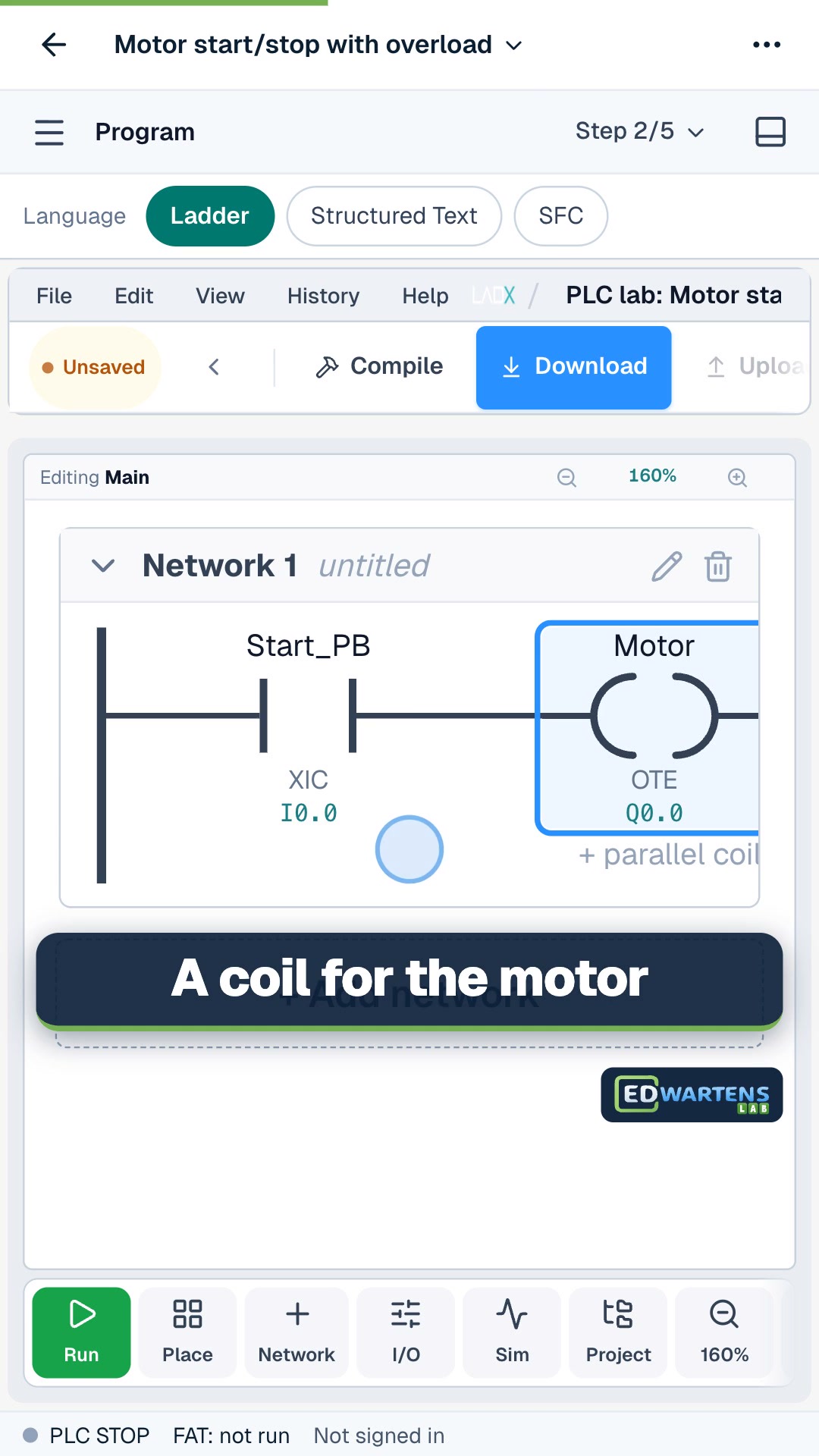


In UK job adverts, "PLC programmer", "PLC engineer" and "controls engineer" overlap heavily, but there is a rough pattern: a programmer mainly writes and modifies control software, a PLC engineer adds commissioning and fault support, and a controls engineer designs and delivers whole control systems. ITJobsWatch shows a median advertised salary of £60,000 for PLC Engineer roles and £55,000 for Control Systems Engineer roles in the six months to 21 October 2026. Always read the duties in the advert, not just the title.
What does a PLC engineer do?
A PLC engineer designs, programs, tests, commissions and supports the control logic that runs machines and processes. That usually means writing ladder logic or structured text, configuring I/O and networks, building operator screens, testing against a functional specification, going on site to commission, and fixing faults afterwards.
Prospects describes the wider control and instrumentation engineer as someone who designs, installs, manages and maintains equipment that monitors and controls systems and processes, and lists PLC, SCADA, DCS and advanced process control as the disciplines to learn. The Skills England technician standard (ST0662) lists duties such as programming control system hardware, commissioning, servicing, developing or modifying control programs, and testing for safety and compliance.
In practice, a PLC engineer's week moves between the office (specification, code, simulation), the workshop (factory acceptance testing) and site (commissioning, support).
How is a PLC programmer different?
A PLC programmer is the narrowest of the three titles, focused on writing and modifying the control program. The role is often at a machine builder, a system integrator or a consultancy, and it may be on a contract basis. A programmer may work from a spec someone else wrote and may do less site work, though many adverts blur the line.
Reed listed 107 "PLC programmer" jobs on 21 October 2026. The titles and salaries shown on the first page include:
- PLC Programmer (Allen-Bradley, Mitsubishi, Schneider): £48,000 to £55,000
- PLC Programmer (training on DCS programming): £40,000 to £45,000
- Control Systems Engineer / PLC Programmer: £55,000 to £70,000
- Software Engineer (PLC, Siemens TIA Portal): £40,000 to £50,000
Several of these list "programmer" and "engineer" together, which is the point: the job title often reflects the employer's habit, not a different job.
What does a controls engineer do?
A controls engineer usually has a wider remit: designing the control architecture, choosing hardware, specifying instruments and networks, and delivering projects, not just writing code. Prospects places control and instrumentation engineers in manufacturing, energy, pharmaceutical and chemical sectors, and lists DCS and SCADA alongside PLCs among the disciplines.
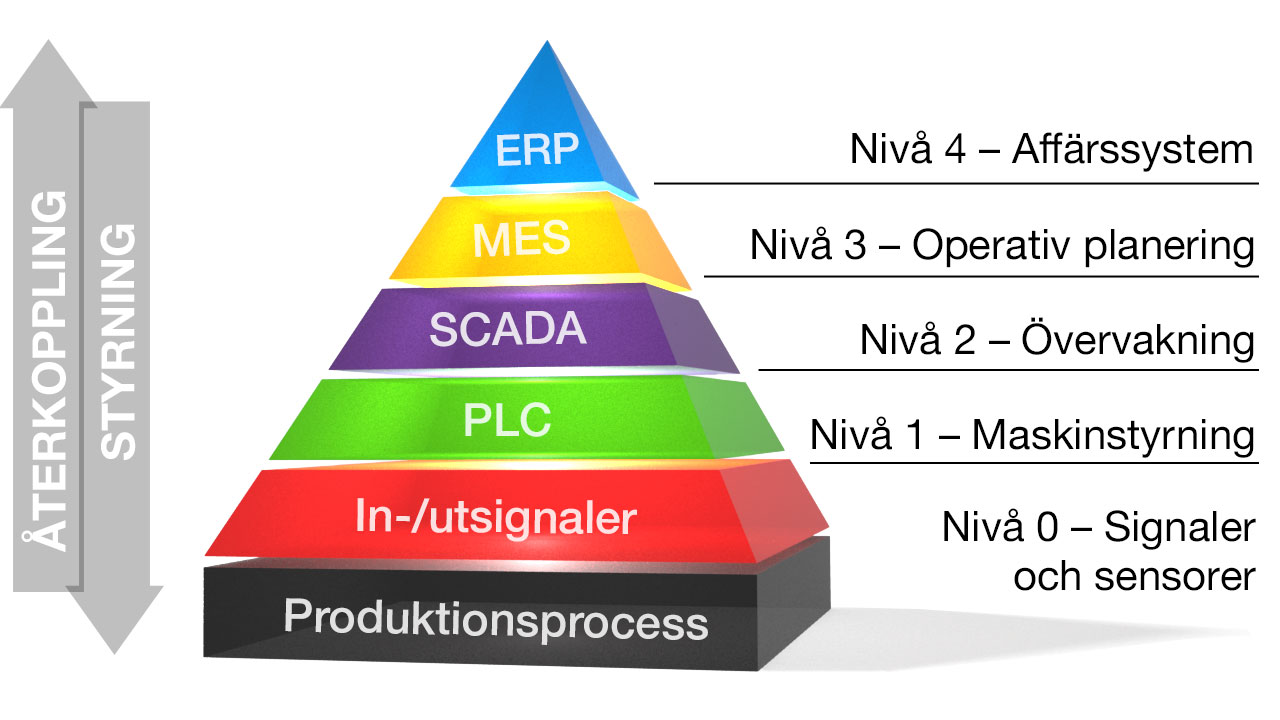
The automation pyramid above (labels are in Swedish: signals and sensors, machine control, supervision, operational planning, business systems) is a useful mental map. A PLC programmer works mostly at the machine-control layer. A PLC engineer also reaches down to I/O and up to HMI and SCADA. A controls engineer may own several layers and the interfaces between them. Our guide to PLC vs SCADA explains the layers.
How do the titles compare, and what do they pay?
The table compares the typical focus of each title with advertised-pay signals from ITJobsWatch for the six months to 21 October 2026. ITJobsWatch is an IT-focused index and several samples are small, so treat the figures as indicative.
| Title | Typical focus | Median advertised salary | Ad volume (permanent) |
|---|---|---|---|
| PLC programmer | Writes and modifies control logic; less design and site work | £70,000 (very small sample, shown without a prior-year comparison) | 13 |
| PLC engineer | Programs, tests, commissions and supports PLC systems | £60,000 (£57,000 a year earlier; 10th percentile £42,500, 90th £65,000) | 144 |
| Control systems engineer | Designs and delivers wider control systems incl. DCS or SCADA | £55,000 (unchanged year on year; 90th percentile £95,000) | 217 |
| Automation engineer | Broad: PLC, robots, vision, line improvement | £60,000 (£55,000 a year earlier; 10th percentile £45,000, 90th £82,500) | 463 |
| SCADA (skill cited in the ad) | Supervisory screens, data, alarms | £55,000 | 632 |
Do not read the £70,000 programmer figure as proof that programmers earn more: it rests on 13 ads. The more reliable message is that all four titles cluster around £55,000 to £60,000 at the median, with entry roles well below that. Reed's trainee examples run from £27,000 to £30,000 for graduate trainee roles up to £40,000 to £50,000 for a junior automation engineer working with Siemens TIA Portal. For more, see PLC engineer salary in the UK.
Why do the job titles overlap so much?
Employers use whichever title their HR system or recruiter prefers, and the market has not standardised. The job titles table on ITJobsWatch's PLC Engineer page shows the spread: PLC Software Engineer (67 ads), Electrical Engineer (23), Systems Engineer (16), Automation Engineer (12), PLC SCADA Engineer (8) and Control Systems Engineer (7).
So the practical advice is to search for the skills (PLC, TIA Portal, SCADA, commissioning) and then read the duties. A "technician" advert may involve programming; an "engineer" advert may be mostly maintenance.
This 17-minute introduction from a university lecturer on the LeMaster Tech channel explains the controls and automation field and where PLCs sit. It is US-based, so the job titles differ, but the technical layers are the same.
What does a typical week look like?
There is no single typical week. The pattern below is an illustrative example of integrator-style work, not published data, to show how the titles differ in practice.
- PLC programmer: most of the week is in the code editor, working from a functional specification, with simulation testing and code reviews. A few days of site time are possible during commissioning.
- PLC engineer: a mix of specification meetings, programming, workshop testing and one or two site visits. When a machine stops, you are the person asked why.
- Controls engineer: more time on drawings, hardware selection, suppliers, schedules and customer meetings, with the programming often shared with colleagues.
The mix depends more on the employer than on the title. A machine builder's PLC engineer may write code all week, while a plant's in-house controls engineer may spend most days on faults and small changes.
How do you read a PLC job advert?
Read the duties first, then the platform, then the location, and only then the salary. A quick checklist helps:
- Duties: does it say design, programming, commissioning, support or maintenance? Count the verbs.
- Platform: Siemens, Rockwell, Mitsubishi or Schneider? ITJobsWatch's skills table for PLC Engineer ads lists Siemens in 17 of 144 ads and Rockwell in 8, so some adverts name the platform and many do not.
- Site time and travel: integrators and service roles usually travel; in-house roles mostly do not.
- Sector and standards: regulated sectors such as pharmaceuticals bring documentation rules; GAMP appears in 3 of the 144 ads in ITJobsWatch's skills table.
- Pay against the spread: compare the range with the percentiles above, not just the median. A 10th percentile of £42,500 and a 90th of £65,000 for PLC Engineer ads shows how wide the spread is.
If the advert is vague, ask the recruiter what share of the week is spent on site and who writes the specification. The answers usually reveal which of the three jobs it really is.
What is the career progression?
A typical path runs from technician or trainee, to PLC or controls engineer, to senior or lead engineer, and then to project engineer, engineering manager, or specialist. Prospects gives a guide of £35,000 to £50,000 for C&I engineers with several years of experience and up to £75,000 at senior or chartered level, with directors in some sectors potentially earning more. A Skills England technician pathway aligns with EngTech registration through the IET and IMechE, and a degree route can lead to chartered status.
Sideways moves are common too: into SCADA and data, industrial cybersecurity, robotics, functional safety or pre-sales. Our automation engineer career guide covers those options.
Which title should you aim for first?
Aim for the title that gets you the most hands-on exposure, not the grandest label. A first role as a trainee service engineer, junior controls engineer or maintenance technician exposes you to real faults, which is what separates people later. If you can only find "PLC programmer" work, ask whether you will get on-site commissioning time. The skills employers keep coming back to are fault finding, sound documentation and working safely on site; the 50 interview questions show what interviewers probe.
How EDWartens can help
The EDWartens UK Professional Module teaches Siemens TIA Portal, S7 PLC hardware concepts, ladder logic, HMI and WinCC SCADA over five live online days. It is simulation-based (PLCSIM and Factory I/O), not a physical rig, and its CPD certificate is not a regulated qualification. Career support includes a one-to-one resume session and role-specific CV templates, with no job guarantee. See the Professional Module, enrol via signup, or start free with the PLC simulator.