
Maintenance engineer interview questions in the UK mostly test four things: how you find a fault in a logical order, how you keep yourself and others safe, how you handle planned maintenance and paperwork, and whether you fit the shift pattern. This guide gives original questions, a short model answer shape for each, and the reason the interviewer asks.
Checked 28 October 2026. Legal and safety points come from HSE pages and National Careers Service pay from its job profile, all opened that day. Pay medians come from the ONS ASHE 2026 provisional tables. Nothing here predicts what any employer will ask or pay.
What are interviewers for UK maintenance roles really testing?
They want evidence that you can keep production running without hurting anyone. The National Careers Service describes an engineering maintenance technician as someone who needs "practical skills for repairing and maintaining equipment", "problem-solving skills", the ability to "be thorough and pay attention to detail", and the ability to work well with others and on your own. Almost every question is a way of checking one of those.
Expect a mix: a few technical questions for your trade (electrical, mechanical or both), two or three safety questions, one or two about your history, and some practical ones about shifts, call-outs and working alone. Some sites add a short practical test or a plant walk-round. Nobody can say which questions you will get, so prepare the method, not a script.
How do you answer a breakdown or fault-finding question?
A breakdown scenario is a very common question: "A packaging line has stopped. Talk me through what you do." Use the same shape every time.
- Make it safe and get the facts. Check nobody is at risk, speak to the operator, and ask what changed, what alarms showed and when it last ran properly.
- Look before you touch. Read the HMI or fault display, check the obvious (guards, e-stops, sensors, air, fuses, tripped breakers) and note what you see.
- Narrow it down. Split the system in half: is the problem input, logic or output? Is it electrical, mechanical, pneumatic or a process issue?
- Isolate before you work on it. Where the fix means opening equipment, isolate, lock off, prove dead and follow the site permit rules.
- Fix, test and prove. Make one change at a time, test the repair and run the machine with the operator.
- Record and prevent. Log the fault and fix in the CMMS or maintenance book, then ask whether the cause will come back.
A strong answer names a real job. "On a filler that kept stopping, the photo-eye looked fine, but the output on the PLC input card was flickering, so I swapped the sensor and found a damaged cable" is far better than a list of steps. If you are early in your career, use a placement, a college project or a lab exercise and say so honestly.
Safety and regulation questions: PUWER, LOLER, isolation, permits, COSHH
UK interviewers rarely expect you to quote regulation numbers. They expect you to know what the rules are for and to describe what you would do. Here are questions to practise, with the points a sound answer covers.
"What is PUWER and how does it affect your job?" HSE lists the Provision and Use of Work Equipment Regulations 1998 with sections on inspection, maintenance, and training and competence. HSE's maintenance page says equipment must be kept "in an efficient state, in efficient order and in good repair" and that "Maintenance work should only be carried out by those who are competent to do the work." A good answer links that to your daily work: PPM, inspection records and staying within your competence.
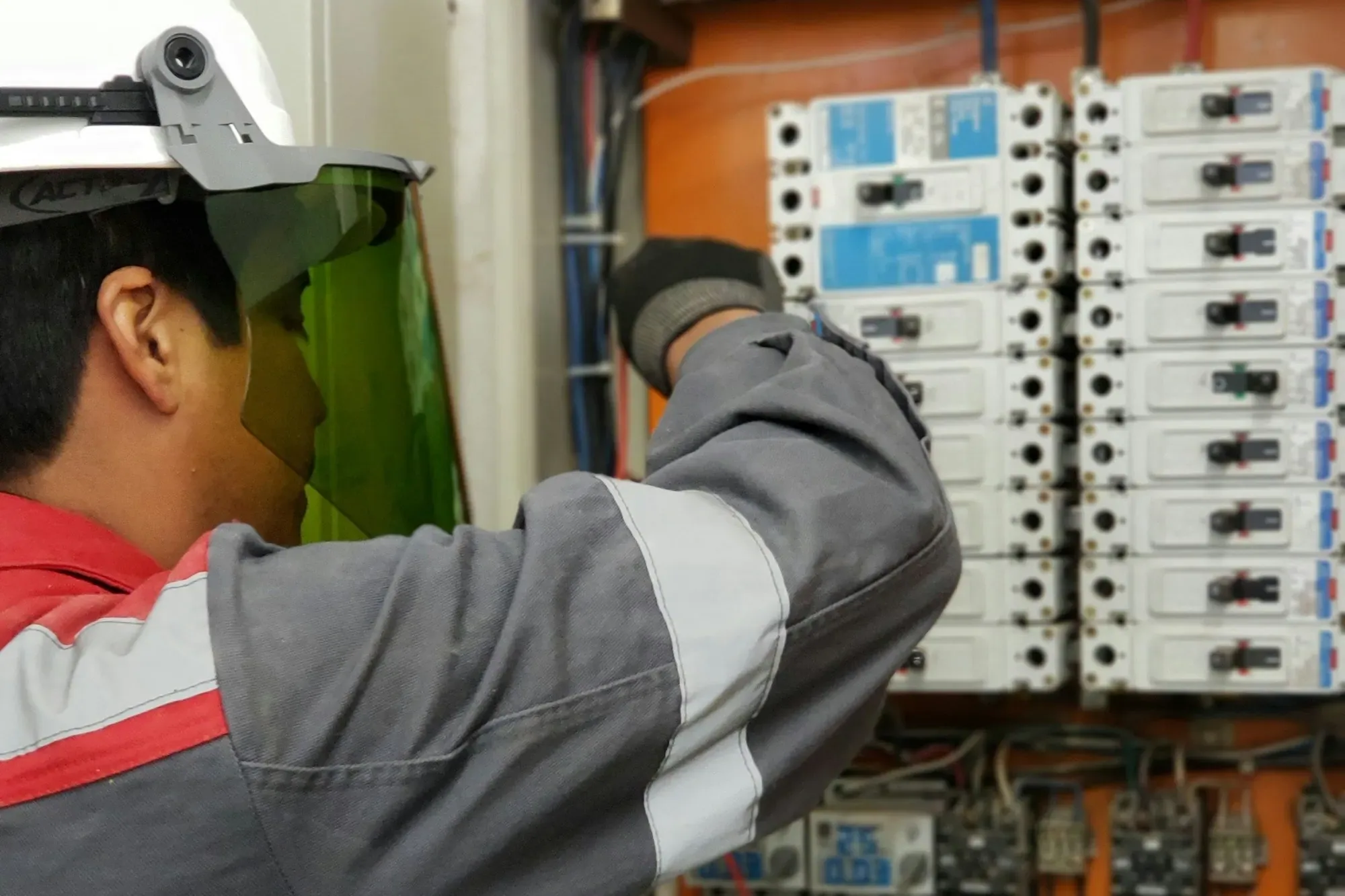
"Tell me how you isolate a machine." HSE's maintenance page says moving plant should be stopped and electrical and other power supplies isolated before maintenance, and machines should be locked off if power could be switched back on accidentally. Describe the sequence in your own words: identify the energy sources (electrical, air, hydraulic, stored energy), switch off, lock off with your own lock and tag, prove the circuit dead with a tested instrument and release stored energy. Say that you follow the site's written procedure.
"What is a permit to work and when is it used?" HSE's permit to work page describes a permit to work as "a more formal system stating exactly what work is to be done and when, and which parts are safe", used for higher-risk jobs such as hot work or vessel entry, and for work needing electrical or mechanical isolation. It also says "The issue of a permit does not, by itself, make a job safe." Mention handover: leaving plant safe for the next shift.
"What does LOLER cover?" HSE's LOLER overview says lifting operations must be planned by a competent person, supervised and carried out safely, and that lifting equipment must be thoroughly examined at set points. For a maintenance engineer the practical answer is: use only equipment with a valid examination, check the safe working load, and never lift outside your training.
"How do you deal with a chemical spill or a new lubricant?" HSE says the COSHH regulations "require employers to plan, manage and monitor the substances hazardous to health". Mention the safety data sheet, the COSHH assessment, correct PPE and who to tell.
"When would you work on live equipment?" The safe answer is that you would not unless it is properly justified, risk-assessed, authorised and done by a competent person under the site's rules. Fault-finding sometimes needs power on to test, so describe testing with the right instruments and protection, and stopping if you are unsure. This is not a how-to: live testing and isolation need training, a permit where required and a competent person. Follow HSE guidance and your employer's procedures.
Electrical, mechanical and controls questions for multi-skilled roles
Multi-skilled advertisements ask for a bit of everything, so interviews sample each area. Practise short, correct answers to these:
- Electrical: What is the difference between an overload relay and a fuse or MCB? How would you test a three-phase motor that trips on overload? What does a contactor do, and what are auxiliary contacts for?
- Mechanical: How do you check belt tension and alignment? What are the signs of a failing bearing? When would you use a torque wrench, and why?
- Pneumatics and hydraulics: How would you trace an air leak? What does a solenoid valve do, and how do you tell whether the coil or the valve is at fault?
- Controls: What is the difference between a digital and an analogue input? What would you check if a sensor shows the wrong value? How would you tell whether a PLC output is on but the device is not moving?
If you do not know something, say how you would find out: the manual, the drawing, the manufacturer, a colleague. For a refresher, the free PLC, electrical troubleshooting and maintenance course and the free electrical fundamentals for technicians course cover these ideas step by step.
Planned maintenance, root cause and CMMS questions
Good maintenance teams spend more time preventing breakdowns than fixing them. Questions you may get:
- "What is the difference between reactive, preventive and predictive maintenance?" Reactive is fixing after failure, preventive is on a schedule, predictive uses condition data such as vibration or temperature. Give an example of each.
- "How do you carry out root cause analysis?" Describe asking "why" repeatedly, checking evidence rather than assumptions, and the difference between the failed part and the reason it failed.
- "Have you used a CMMS?" Say which system, what you recorded (work order, parts used, time, cause) and how the data was used. If you have not, say you have used paper or spreadsheets and describe how.
- "How do you decide what to fix first?" Safety first, then quality and production impact, then cost. Mention talking to the production supervisor.
Use the STAR shape for any question about your history: Situation, Task, Action, Result. Keep it to about two minutes, spend most of the time on the action, and give a result you can measure or at least describe (the line restarted, the fault did not return, the PPM was updated).
Questions about shifts, call-outs and working alone
The National Careers Service says an engineering maintenance technician could work "evenings / weekends / bank holidays on shifts". So expect: "Can you work 4-on-4-off days and nights?", "How do you cope with nights?", "What would you do on a night shift if you were stuck on a fault and nobody senior was on site?" and "How do you feel about being on call?"
Answer honestly. If you have not done nights, say so and explain how you would prepare. For the lone-working question, the sound answer is: make safe, do not take risks to save time, follow the site's escalation route, use the on-call contact and record it. Shift patterns such as 4-on-4-off vary by site, so ask how yours would work.
Questions for electricians and instrument technicians
If you come from an electrical or instrumentation background, expect the above plus trade questions.
Electricians: How do you carry out safe isolation and prove dead? What is the 18th Edition (BS 7671) and how does it affect your work? What test would you do on a motor circuit before re-energising? Describe a fault you traced on a three-phase supply.
Instrument technicians: How does a 4-20 mA loop work and why is 4 mA the live zero? How would you calibrate a pressure transmitter? What do you check if a flow reading is wrong, the sensor, the wiring, the scaling or the process?
What does the job pay, and what should you ask them?
Asking about pay is normal. Know the range before you go. The National Careers Service (read 28 October 2026) lists a starter salary of £27,000 and an experienced salary of £48,000 for an engineering maintenance technician, with typical hours of 40 to 42 a week.
For a second view, the ONS Annual Survey of Hours and Earnings, 2026 provisional, Table 14.7a, shows these median annual gross pay figures for full-time employees in the UK (this is all full-time employees in each occupation, not shift workers and not adverts):
| ONS occupation code | Occupation | Median, full-time (ASHE 2026 provisional) |
|---|---|---|
| 5223 | Metal working production and maintenance fitters | £41,942 |
| 5241 | Electricians and electrical fitters | £40,717 |
| 5246 | Electrical service and maintenance mechanics and repairers | £44,785 |
These are medians for the whole occupation across all sectors and regions. They do not say what one employer will offer.
Sensible questions to ask at the end:
- How is pay made up: basic, shift allowance, overtime rate, call-out payment?
- What is the shift pattern, and how often does it rotate?
- What training and tickets will the company pay for?
- How is breakdown cover arranged, and who is on site on nights?
- What does the first month look like?
Practise before the interview
Saying answers aloud helps more than reading them. Two videos show the question styles: How2Become's "Industrial Maintenance Technician Interview Questions and Answers" (uploaded 12 February 2026) and CareerVidz's "Maintenance Technician Interview Questions and Answers" (uploaded 12 November 2020). Both are general and partly US-framed, so ignore anything that refers to US rules and use the UK points above.
Treat both as one coach's advice, not as a guide to any employer.
Start free
If you want to practise the thinking behind these answers, start with the free PLC, electrical troubleshooting and maintenance course and the free electrical fundamentals for technicians course. Then try the multi-skilled maintenance engineer job simulation: it is practice, not employment, and the first five days are free. You can also rehearse a fault-finding task in the free Lab multimeter simulator.
To see what employers are advertising, browse the maintenance jobs page or the multi-skilled maintenance engineer roles. EDWartens does not place people in jobs and cannot promise an interview or an offer. For more on this role, read our multi-skilled maintenance engineer guide.