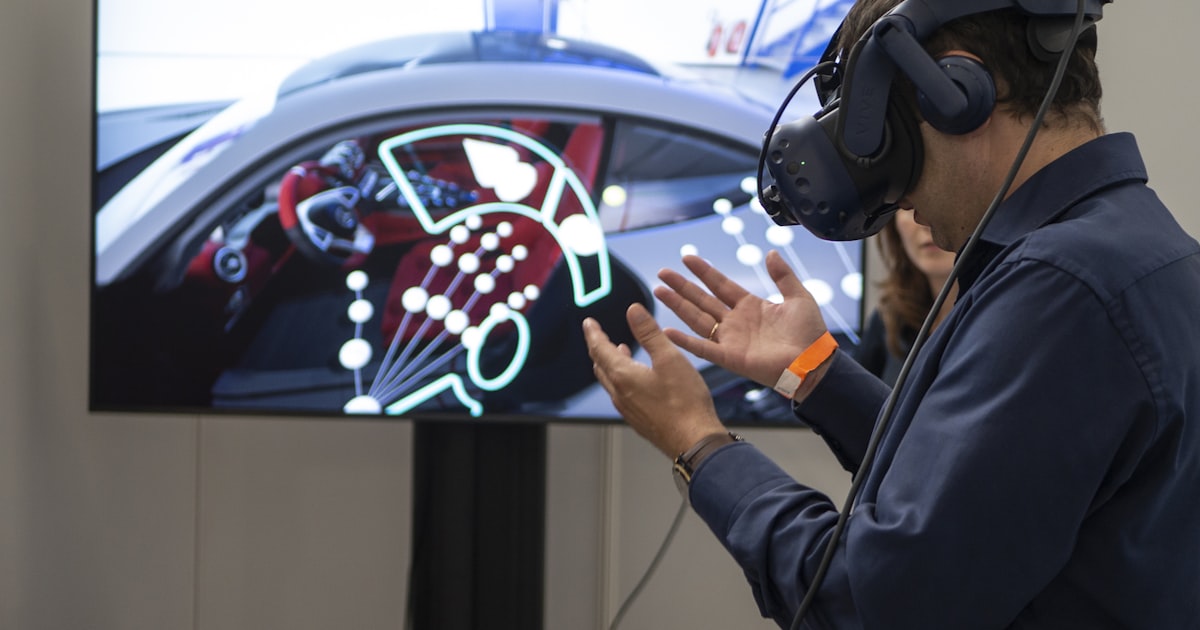

Virtual Reality (VR) is no longer a novelty in industrial training. It has become a proven methodology that delivers measurable improvements in learning outcomes, safety, and cost-effectiveness. At EDWartens, we have integrated VR into our training programmes, and the results speak for themselves.
The Problem with Traditional Training
Industrial automation training has traditionally relied on:
- Classroom lectures: Theory-heavy, limited engagement, poor knowledge retention.
- Physical labs: Expensive to maintain, limited equipment availability, safety concerns with live electrical systems.
- On-the-job training: Risky for beginners, dependent on mentor availability, inconsistent quality.
These methods have significant limitations. Students often graduate from training programmes without sufficient hands-on experience, leading to a steep learning curve when they enter the workplace.
How VR Changes the Game
VR training creates immersive, interactive environments where students can practise with virtual replicas of real industrial equipment. Here is how it transforms learning:
Safe Practice Environment
Students can work with high-voltage panels, live PLCs, and complex machinery without any physical risk. They can make mistakes, learn from them, and repeat exercises until they achieve mastery. This is particularly valuable for safety-critical tasks like lockout/tagout procedures and electrical fault finding.
Realistic Equipment Interaction
Modern VR simulations replicate real equipment with extraordinary fidelity. Students interact with virtual Siemens S7-1500 PLCs, Allen-Bradley ControlLogix racks, and industrial control panels that look and behave exactly like their physical counterparts.
Unlimited Repetition
Unlike physical labs where equipment must be shared among students, VR allows unlimited practice time. Students can repeat complex procedures as many times as needed to build confidence and competence.
Scenario-Based Learning
VR enables training scenarios that would be impossible or dangerous to recreate in a physical lab:
- Electrical fault diagnosis on live panels
- Emergency shutdown procedures
- Equipment failure scenarios
- Hazardous environment operations
Remote and Flexible Learning
VR training can be delivered anywhere with a headset, making it ideal for remote learners and distributed teams. This has been particularly valuable since 2020, enabling uninterrupted practical training regardless of location.
Measurable Results
Studies and our own experience at EDWartens show significant benefits:
- 40 percent faster skill acquisition compared to traditional classroom training
- 75 percent improvement in knowledge retention after 30 days
- Zero safety incidents during VR-based practical sessions
- Higher student engagement measured by completion rates and satisfaction scores
VR in Our Training Programmes
At EDWartens, we use Meta Quest headsets combined with custom-developed industrial simulation environments. Our VR modules cover:
- PLC hardware identification and wiring
- Panel building and electrical connections
- HMI navigation and operation
- Fault finding and troubleshooting
- Safety procedures and risk assessment
The VR components complement our hands-on hardware labs, creating a blended learning experience that produces exceptionally well-prepared engineers.
The Future of VR in Industrial Training
The technology continues to advance rapidly:
- Mixed Reality (MR) will overlay digital information onto real equipment, enabling guided maintenance and assembly.
- AI-driven adaptive learning will personalise VR training scenarios based on individual student performance.
- Haptic feedback devices will add tactile sensation, making virtual interactions even more realistic.
- Collaborative VR environments will enable group training exercises with participants from different locations.
Industrial education is at an inflection point. Organisations that embrace VR training will produce better-prepared engineers, reduce training costs, and improve safety outcomes. At EDWartens, we are proud to be at the forefront of this transformation.
