
The Problem with Traditional Automation Training
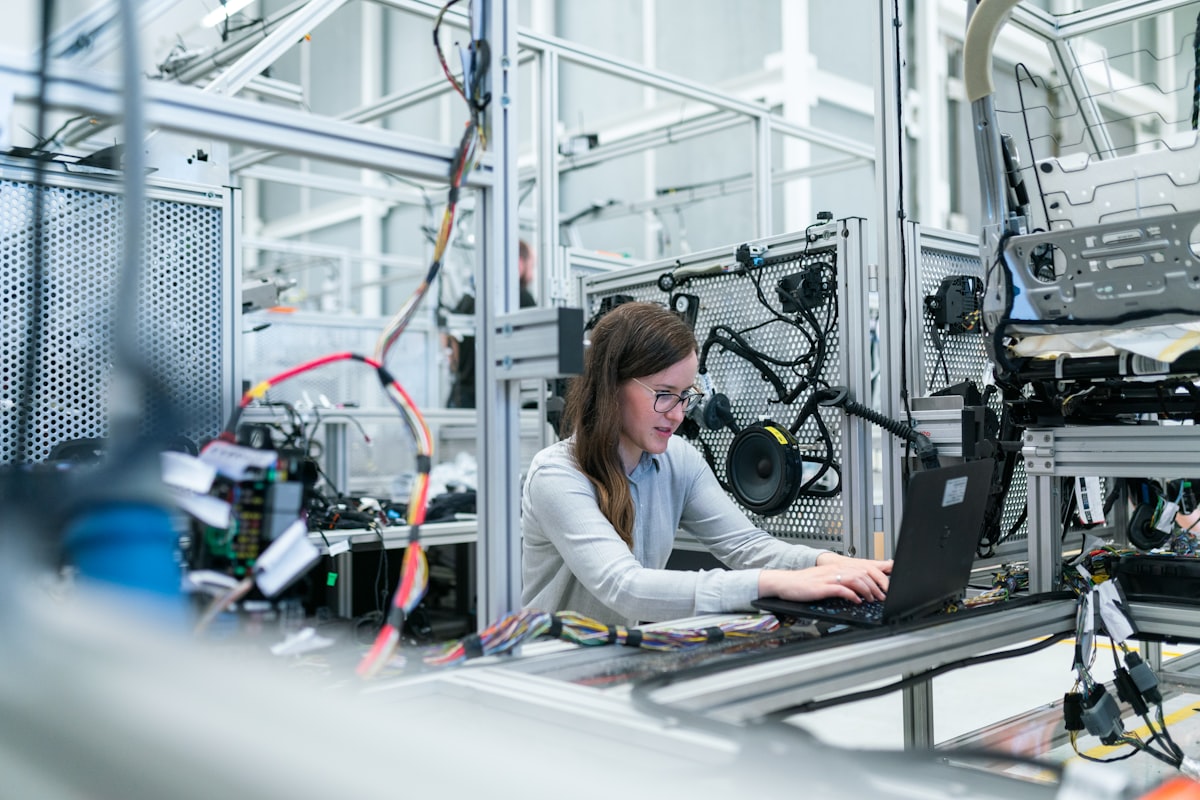
Industrial automation training has always faced a fundamental tension: you need hands-on practice with real equipment to develop genuine skills, but real industrial equipment is expensive, potentially dangerous, and limited in availability. This tension has meant that many training programmes either skimp on practical work or invest heavily in physical labs that can only serve a limited number of students.
Virtual reality technology is resolving this tension by creating immersive, realistic training environments that are safe, scalable, and available anywhere.
What VR Training Looks Like in Practice
Modern VR training for industrial automation goes far beyond simple video demonstrations. Using headsets like the Meta Quest series, students enter fully interactive 3D environments that replicate real industrial settings:
Virtual Control Panels
Students stand in front of life-size virtual control panels and interact with components using hand tracking or controllers. They can flip switches, press buttons, connect wires, and observe the effects in real time. The panel components are modelled after real Siemens, Allen-Bradley, and other manufacturer hardware.
Virtual Factories
Platforms like Factory I/O create virtual factory environments with conveyor belts, sorting systems, robotic arms, tanks, and processing equipment. Students programme real PLCs (or simulated PLCs) that control the virtual factory, seeing the direct relationship between their code and the physical behaviour of machinery.
Fault Simulation
VR enables training scenarios that would be too dangerous or too expensive to recreate in a physical lab. Instructors can inject faults such as electrical shorts, sensor failures, communication breakdowns, and mechanical jams. Students must diagnose and resolve these faults using the same troubleshooting methodology they would use on real equipment.
Safety Training
Lockout/tagout procedures, confined space entry, electrical safety, and emergency shutdown procedures can all be practised in VR without any physical risk. Students experience realistic hazard scenarios and learn proper safety protocols before encountering them on a live site.
Benefits Over Traditional Methods
Safety
This is the most obvious advantage. Students can make mistakes, learn from them, and try again without any risk of injury or equipment damage. In traditional labs, the fear of damaging expensive equipment or causing electrical hazards can inhibit learning.
Repeatability
In a physical lab, resetting equipment for the next exercise takes time and instructor effort. In VR, a scenario can be reset instantly and repeated as many times as needed. This allows students to practise until they achieve mastery, not just complete a single pass.
Accessibility
VR training can be delivered anywhere with a headset. Students in remote locations, different countries, or unable to travel to a training centre can access the same quality of practical training as those in the classroom. This has been transformative for online and blended learning programmes.
Scalability
A physical lab can serve perhaps 10 to 20 students at a time, limited by the number of PLC training rigs. VR environments can serve unlimited concurrent users, each with their own complete setup. This makes high-quality practical training economically viable at scale.
Scenario Diversity
VR environments can simulate equipment and scenarios from multiple industries: water treatment plants, automotive production lines, pharmaceutical clean rooms, and oil refinery control rooms. Physical labs are typically limited to one or two standardised training rigs.
Platforms and Tools
Factory I/O
A 3D factory simulation platform that interfaces directly with real PLCs and PLC simulators. It provides pre-built factory scenes and a construction kit for building custom scenarios. Factory I/O is the industry standard for PLC training simulation.
Meta Quest Headsets
The Meta Quest 3 and Quest Pro are the most widely used headsets for industrial VR training. They offer standalone operation (no PC required), excellent hand tracking, and a growing ecosystem of industrial training applications.
Custom VR Environments
Some training providers develop custom VR environments using platforms like Unity or Unreal Engine. These can be tailored to specific equipment, processes, and learning objectives.
The Future of VR in Engineering Education
VR technology for industrial training is advancing rapidly:
- Mixed reality (MR): Overlaying digital information onto real physical equipment for guided maintenance and assembly tasks
- AI-driven adaptive learning: VR systems that automatically adjust difficulty and provide personalised feedback based on student performance
- Haptic feedback: Gloves and controllers that provide tactile sensation, making virtual interactions feel more realistic
- Collaborative VR: Multiple students and instructors sharing the same virtual environment from different physical locations
- Digital twin integration: VR environments connected to real-time data from actual factories, allowing training on live production processes
What This Means for Your Training
If you are choosing a PLC training programme, look for providers that incorporate VR or advanced simulation into their curriculum. The combination of theoretical instruction, VR-based practical work, and real hardware access (where available) produces the best-prepared engineers.
EDWartens integrates VR training into our programmes using Meta Quest headsets and custom industrial simulation environments. Learn more about our training approach or contact us to experience a VR training demonstration.
