

Key Takeaways
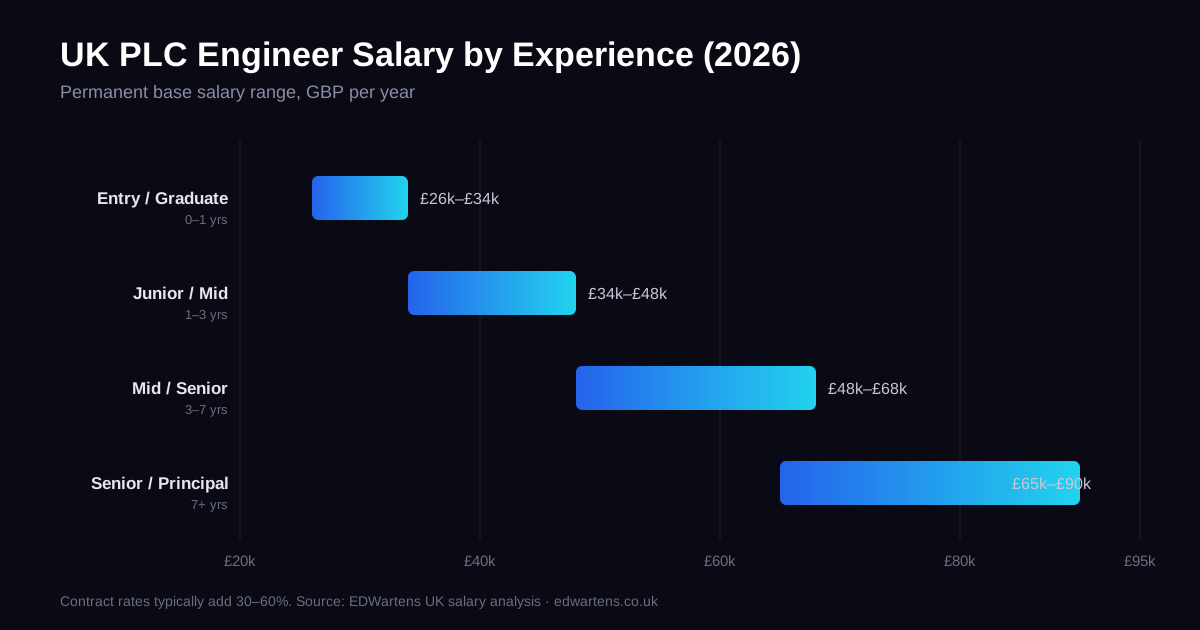
- UK PLC engineers earn from £26,000 at graduate level to £90,000+ at principal level, with the steepest growth in the first three to five years.
- Contracting pays 30–60% more than permanent work — a senior contractor can clear £90,000+ a year — but without holiday pay, pension, or sick pay.
- Multi-platform, SCADA, and SIL safety skills each add 10–20% to your pay.
- Oil & gas, pharmaceuticals, and nuclear carry the biggest industry premiums, up to 25%.
The PLC Engineer Pay Landscape in 2026
PLC engineering is one of the best-paid technical careers in the UK, and the trend into 2026 remains upward — driven by a persistent automation skills shortage and continued investment in manufacturing, energy, and infrastructure. This guide breaks down exactly what you can expect to earn, with data segmented by experience, region, industry, and employment type.
Salary Bands by Experience Level
Entry Level and Graduate (0-1 years)
Engineers entering their first PLC role after completing training or graduating from a relevant degree programme can expect:
- Permanent salary: GBP 26,000 to GBP 34,000
- Typical job titles: Junior PLC Programmer, Graduate Controls Engineer, Automation Technician
At this level, employers are investing in your development. Salaries are lower but the learning curve is steep, and progression is fast if you perform well.
Junior to Mid-Level (1-3 years)
- Permanent salary: GBP 34,000 to GBP 48,000
- Typical job titles: PLC Programmer, Controls Engineer, Automation Engineer
After one to three years, you should be able to independently programme PLCs, develop HMI screens, and commission systems with decreasing supervision. This is where the fastest salary growth happens.
Mid-Level to Senior (3-7 years)
- Permanent salary: GBP 48,000 to GBP 68,000
- Typical job titles: Senior PLC Engineer, Senior Controls Engineer, Lead Automation Engineer
At this level, you are leading projects, mentoring juniors, making architectural decisions, and likely managing relationships with clients or end users.
Senior and Principal (7+ years)
- Permanent salary: GBP 65,000 to GBP 90,000
- Typical job titles: Principal Controls Engineer, Controls Manager, Automation Architect, Head of Controls
The highest-paid permanent roles combine deep technical expertise with leadership and commercial awareness. These engineers shape the technical direction of their organisations.
Contract and Freelance Rates
Contracting is popular in automation engineering and typically pays 30 to 60 percent more than equivalent permanent roles, though without benefits like holiday pay, pension contributions, and sick pay.
- Junior contractor (1-3 years): GBP 200 to GBP 300 per day
- Mid-level contractor (3-5 years): GBP 300 to GBP 400 per day
- Senior contractor (5+ years): GBP 400 to GBP 550 per day
- Specialist / niche skills: GBP 500 to GBP 700 per day
Annualised, a contractor working 230 days per year at GBP 400 per day earns GBP 92,000 before expenses and taxes. This is significantly more than most permanent salaries, though it comes with less stability.
Regional Salary Variations
Salaries vary across the UK, though the gap is narrower than in many other professions because automation engineers often travel to client sites.
- London and South East: 10 to 20 percent above national average, but higher living costs offset much of this
- Midlands: Strong demand from automotive and manufacturing; salaries close to the national average
- North West and Yorkshire: Growing hubs for automation with competitive salaries and lower living costs
- Scotland: Oil and gas, whisky, and renewable energy drive strong demand, particularly around Aberdeen and the Central Belt
- Wales and South West: Smaller market but niche opportunities in aerospace, defence, and food processing
- Northern Ireland: Growing sector with competitive salaries relative to local cost of living
Industry Salary Premiums
Some industries consistently pay more than others:
- Oil and Gas: 15 to 25 percent premium, particularly for offshore or remote site work
- Pharmaceuticals: 10 to 20 percent premium for validated system experience
- Nuclear: 10 to 20 percent premium due to security clearance and regulatory requirements
- Automotive: Competitive base salaries with strong benefits packages
- Water and Utilities: Stable employment with good pensions, slightly below average base salary
- Food and Beverage: Average salaries but abundant roles and fast progression
Skills That Command a Premium
Certain skills attract higher pay:
- Multi-platform (Siemens + Allen-Bradley): 10 to 15 percent premium
- SCADA development: 10 to 15 percent premium
- Safety systems (SIL-rated): 10 to 20 percent premium
- Robotics integration: 10 to 15 percent premium
- Python / data skills: Emerging premium as AI adoption grows
How to Increase Your PLC Engineer Salary
If you want to move up the ranges above faster, focus on the levers employers actually pay for:
- Learn a second platform. Being fluent in both Siemens (TIA Portal) and Allen-Bradley (Studio 5000) opens far more roles and adds 10–15%.
- Add SCADA and industrial networking. WinCC, Ignition, PROFINET, and EtherNet/IP experience push you into higher-paid integration work.
- Get commissioning experience across industries. On-site commissioning is where junior engineers become genuinely valuable — and it travels well between sectors.
- Target a premium industry. The same skills earn more in oil & gas, pharma, or nuclear.
- Keep your CPD current. Accredited, up-to-date training signals to employers that you meet professional benchmarks.
Maximising Your Earning Potential
To reach the top of the salary range, focus on:
- Learning multiple PLC platforms (Siemens and Allen-Bradley at minimum)
- Adding SCADA and industrial networking skills
- Gaining commissioning experience across different industries
- Obtaining relevant certifications and CPD accreditation
- Building a reputation through quality work and professional networking
Learn more about the PLC engineer career path and salary progression, or explore our training programmes designed to fast-track your journey to higher-earning roles. Contact us for personalised career advice.
