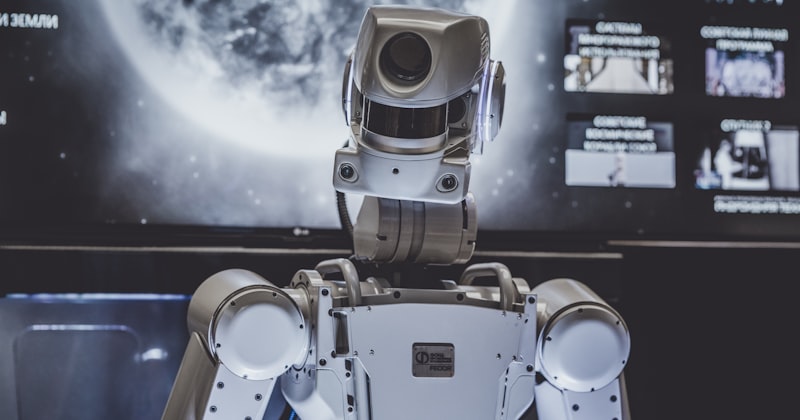

Computer vision represents one of the most impactful applications of artificial intelligence in manufacturing. By giving machines the ability to see and interpret visual information, factories can automate inspection tasks that were previously impossible to scale.
What Is Industrial Computer Vision?
Industrial computer vision uses cameras, lighting systems, and AI algorithms to analyse images and video from manufacturing processes. Unlike simple rule-based machine vision, modern computer vision systems powered by deep learning can handle variability in products, lighting conditions, and camera angles.
Core Technologies
Convolutional Neural Networks
CNNs form the backbone of most industrial vision systems. Architectures such as ResNet, EfficientNet, and YOLO provide the feature extraction and classification capabilities needed for real-time inspection. Transfer learning allows these models to be fine-tuned for specific manufacturing applications with relatively small datasets.
Object Detection and Segmentation
For applications that require identifying where defects are located, object detection models like YOLOv8 and instance segmentation models like Mask R-CNN provide pixel-level precision. This is essential for applications such as weld inspection, surface defect mapping, and assembly verification.
3D Vision
Structured light scanners, time-of-flight cameras, and stereo vision systems enable three-dimensional inspection. This is critical for measuring dimensional accuracy, detecting warping, and verifying complex geometries that cannot be assessed from a single two-dimensional image.
Hardware Considerations
Camera Selection
Industrial cameras range from simple USB webcams for prototyping to high-resolution GigE Vision cameras capable of capturing detailed images at high frame rates. Key specifications include resolution, frame rate, sensor type, and lens compatibility.
Lighting
Proper illumination is arguably more important than the camera itself. Ring lights, backlights, dome lights, and structured light projectors each serve different inspection needs. Consistent, repeatable lighting is essential for reliable AI performance.
Processing Hardware
Edge computing devices such as NVIDIA Jetson AGX Orin, Intel NUC with OpenVINO, and industrial PCs with dedicated GPUs provide the processing power needed for real-time inference. The choice depends on model complexity, frame rate requirements, and environmental constraints.
Deployment Architecture
A typical industrial computer vision system consists of cameras and lighting mounted on the production line, connected to edge computing hardware that runs the AI models. Results are communicated to the line PLC via industrial protocols such as PROFINET or EtherNet/IP to trigger sorting, rejection, or alerting mechanisms.
Integration with MES and SCADA systems provides traceability and enables statistical analysis of quality trends over time.
Common Applications
- Surface defect detection on metal, plastic, and glass components
- Assembly verification ensuring all parts are present and correctly positioned
- Dimensional measurement and tolerance checking
- Label and print quality verification
- Colour consistency checking across batches
Training and Skills
Implementing computer vision in a factory setting requires a blend of AI knowledge, manufacturing understanding, and systems integration expertise. EDWartens courses cover the full pipeline from image acquisition through model deployment on industrial hardware.
